

In personal injury litigation, the outcome of a settlement often depends less on the severity of the injury itself and more on the quality of the evidence that supports it. Among the most influential forms of evidence in a personal injury claim are medical records.
Insurance adjusters, defense attorneys, and mediators rely heavily on documented medical evidence when evaluating the credibility and value of a claim. Medical documentation provides objective proof linking the accident to the injury and demonstrates how the injury has affected the victim’s health, daily activities, and ability to work.
For attorneys handling personal injury cases, understanding the role of medical documentation in PI settlement negotiations is essential. Well-organized medical records can strengthen the credibility of a claim, demonstrate the severity of an injury, and significantly influence settlement value. In contrast, incomplete records or inconsistent treatment histories may allow insurance companies to question the legitimacy of a claim.
Because insurers rely heavily on medical evidence when assessing liability and damages, attorneys who organize and present medical documentation strategically often gain a measurable advantage during settlement negotiations.
Why Medical Documentation Influences Settlement Leverage
Establishing Causation
In every personal injury case, the injured party must demonstrate that the accident caused the injury and that the injury resulted in measurable damages. Medical documentation provides one of the most reliable forms of objective evidence for establishing this connection.
Physician notes, emergency room reports, diagnostic imaging results, and rehabilitation records establish a timeline showing when symptoms first appeared and how they progressed throughout treatment. This timeline helps insurance adjusters determine whether the injury is consistent with the reported accident.
When treatment begins soon after the accident and the medical records consistently document the same symptoms, the documentation strengthens the causal link between the incident and the injury. Under these circumstances, insurers have fewer opportunities to argue that the injury existed before the accident.
Strengthening Claim Credibility
Comprehensive and well-organized medical records also strengthen the credibility of an injury claim. Insurance companies frequently review treatment timelines and physician notes to determine whether the medical evidence supports the severity of the injury being claimed.
When physicians consistently record symptoms, functional limitations, and treatment plans over time, those records reinforce the legitimacy of the injury. Consistency between medical imaging, treatment notes, and specialist evaluations helps insurers understand the full scope of the injury.
Conversely, gaps in treatment or inconsistent documentation may raise doubts during the insurance review process. Adjusters may question whether the injury was serious enough to require the treatment described in the documentation.
Because medical records are classified as protected health information under the HIPAA Privacy Rule, they must be obtained through legally authorized processes. This regulatory structure further reinforces their evidentiary value in legal proceedings.
Using Medical Records to Increase Settlement Value
Medical records do far more than confirm that an injury occurred. When organized strategically, medical documentation helps demonstrate the full impact of an accident on the victim’s health, financial stability, and quality of life.
Several forms of medical evidence are particularly influential during settlement negotiations.
Diagnostic Imaging and Objective Evidence
Objective medical findings are among the most persuasive forms of evidence in personal injury claims. Imaging technologies such as MRIs, CT scans, and X-rays provide measurable proof of physical damage that cannot easily be disputed.
Radiology reports frequently become key documents in cases involving spinal injuries, fractures, or traumatic brain injuries. Because these reports are produced by independent medical specialists, they provide highly credible support for injury claims.
When imaging results clearly show structural damage consistent with the accident, insurers have fewer opportunities to argue that the injury is minor or unrelated.
Physician Treatment Notes
Treatment records are another critical form of medical evidence in settlement negotiations. During each appointment, physicians typically document symptoms, mobility limitations, and recommended treatments.
Over time, these notes create a detailed narrative describing how the injury developed and how it affected the patient’s daily life. Insurance adjusters often evaluate treatment consistency when assessing injury claims.
If records show that a patient attended appointments regularly and followed recommended treatment plans, insurers are more likely to view the injury as legitimate and serious.
How Insurance Companies Evaluate Medical Documentation
Insurance companies typically rely on structured internal review systems designed to measure injury severity and treatment necessity.
When evaluating medical documentation in PI settlement negotiations, adjusters often focus on several key factors:
- the time between the accident and the first medical visit
- the consistency of treatment during recovery
- diagnostic evidence confirming the injury
If treatment begins immediately after the accident and continues consistently, insurers are more likely to recognize the legitimacy of the injury. However, delays in seeking medical care may raise questions about causation.
Insurance companies also review whether the documented symptoms justify the treatments performed. If procedures appear excessive compared to the symptoms described in the records, insurers may challenge the necessity of those treatments.
Understanding how insurers evaluate medical evidence allows attorneys to organize documentation in ways that strengthen negotiation leverage.
Click here for more information on document weaknesses that defense attorneys exploit.
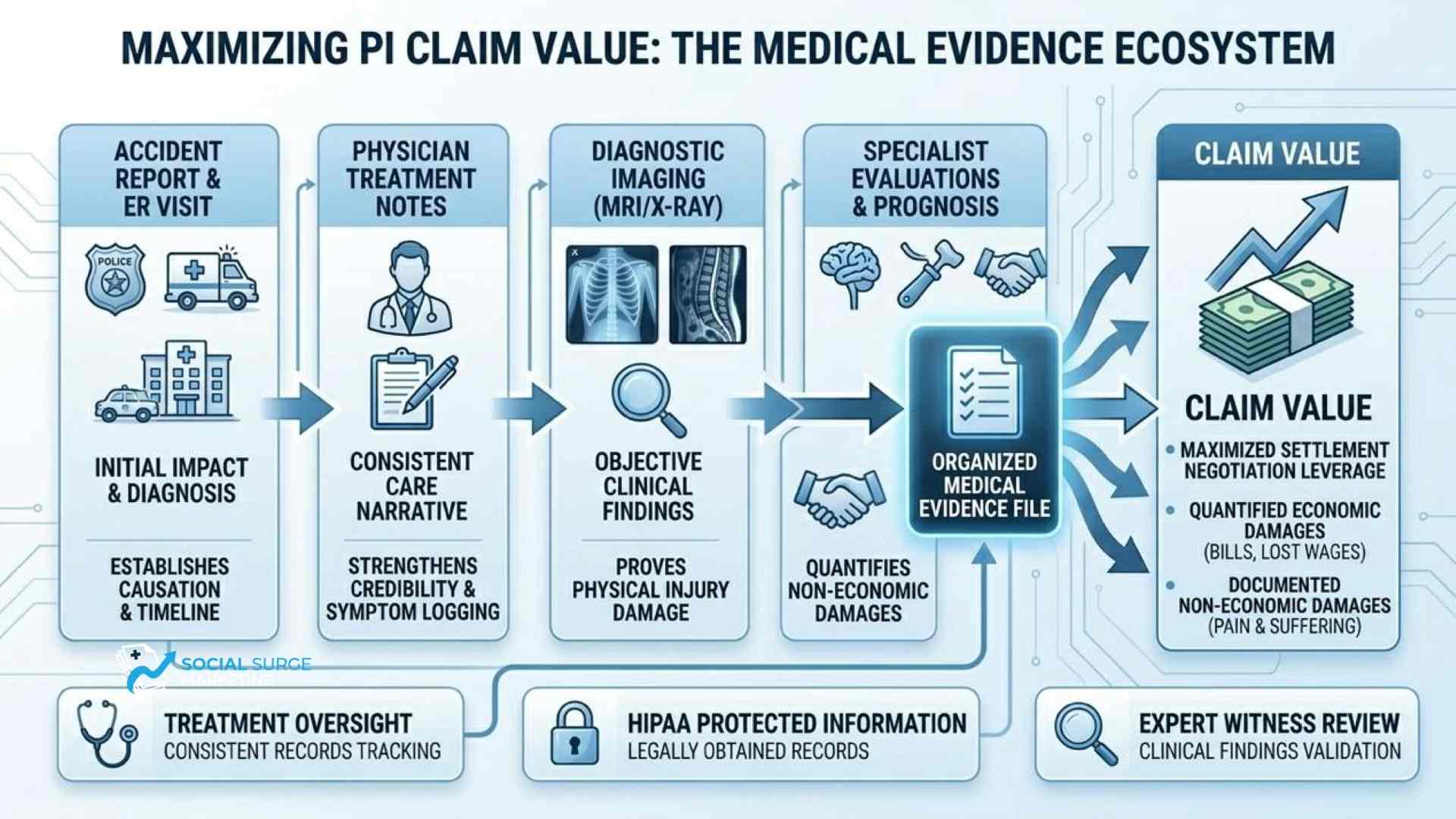
Strategic Use of Medical Evidence in Negotiations
Medical records become significantly more persuasive when attorneys organize them into a clear and chronological treatment timeline.
Rather than presenting hundreds of pages of unstructured documentation, experienced legal teams analyze the medical file and highlight the most relevant clinical evidence supporting the claim.
A well-structured medical file typically demonstrates:
- when symptoms first appeared after the accident
- how treatment progressed during recovery
- what long-term effects the injury created
When these elements are clearly documented, insurers have fewer opportunities to dispute the claim.
Many law firms rely on structured medical record analysis to maintain organized case files throughout litigation. Services such as medical record review for personal injury cases help attorneys evaluate treatment documentation and identify key clinical findings before negotiations begin.
Learn more about this process here: https://socialsurgemarketing.us/services/medical-record-review/
Proving Damages with Medical Documentation
Settlement negotiations ultimately focus on damages. Attorneys must demonstrate how the injury affected the victim financially, physically, and emotionally.
Medical records play a central role in documenting and demonstrating damages in personal injury claims.
Economic damages include measurable costs such as hospital visits, surgical procedures, therapy sessions, prescription medications, and medical equipment. Billing records combined with treatment notes help attorneys demonstrate the financial impact of the injury.
However, many injuries also create non-economic damages that extend beyond medical expenses. Chronic pain, limited mobility, and emotional distress may affect a victim’s ability to work and maintain normal daily activities.
Physicians often document these conditions in treatment notes. Descriptions of persistent pain, reduced mobility, and sleep disruption provide valuable evidence supporting claims for pain and suffering.
Medical specialists may also evaluate long-term recovery expectations. If future surgeries or rehabilitation may be required, those projections can significantly increase settlement value.
The Risk of Documentation Gaps
Incomplete medical documentation is one of the most common factors that weakens personal injury claims.
Insurance companies frequently look for treatment gaps when evaluating injury cases.
Common documentation issues include:
- delayed medical evaluation after the accident
- missing diagnostic imaging reports
- inconsistent symptom descriptions between providers
These gaps may allow insurers to argue that the injury was minor or unrelated to the accident.
To reduce these risks, many law firms monitor treatment progress throughout the case. Services such as treatment oversight coordination for injury cases help attorneys track ongoing treatment and maintain consistent medical documentation.
More information about treatment oversight services is available here: https://socialsurgemarketing.us/services/treatment-oversight/

Expert Witnesses and Medical Evidence
In complex personal injury cases, expert medical witnesses often play an important role in interpreting medical documentation and explaining injuries to insurance companies or courts.
Medical experts review diagnostic imaging, treatment records, and physician reports to determine whether the documented injury is consistent with the reported accident.
Their analysis helps clarify complex medical issues and strengthens the credibility of the medical evidence presented during settlement negotiations.
Learn more about coordinating expert testimony here: https://socialsurgemarketing.us/services/witness-coordination/
Conclusion
In personal injury litigation, the strength of a settlement claim often depends on the quality and organization of its medical documentation. Detailed medical records establish causation, demonstrate damages, and provide objective evidence supporting fair compensation claims.
When attorneys understand how medical documentation in PI settlement negotiations influences insurance claim evaluation, they can organize evidence more effectively and strengthen their negotiating position.
Clear treatment timelines, consistent physician documentation, and expert medical analysis allow legal teams to present injury claims with greater credibility and increase the likelihood of securing fair settlements for injured clients.