

Delayed medical treatment affects personal injury claims in several important ways. Insurance companies often examine the timing of medical care when evaluating whether an injury is directly related to an accident.
In personal injury litigation, the timing and quality of medical evidence often play a decisive role in determining whether an injury claim is successful. Insurance companies, defense attorneys, and courts rely heavily on treatment timelines when determining whether an injury is genuinely connected to the accident. When medical care begins shortly after an incident, physicians can document symptoms while they are still clearly associated with the event. However, when delayed medical treatment occurs, the connection between the accident and the injury can become more difficult to establish.
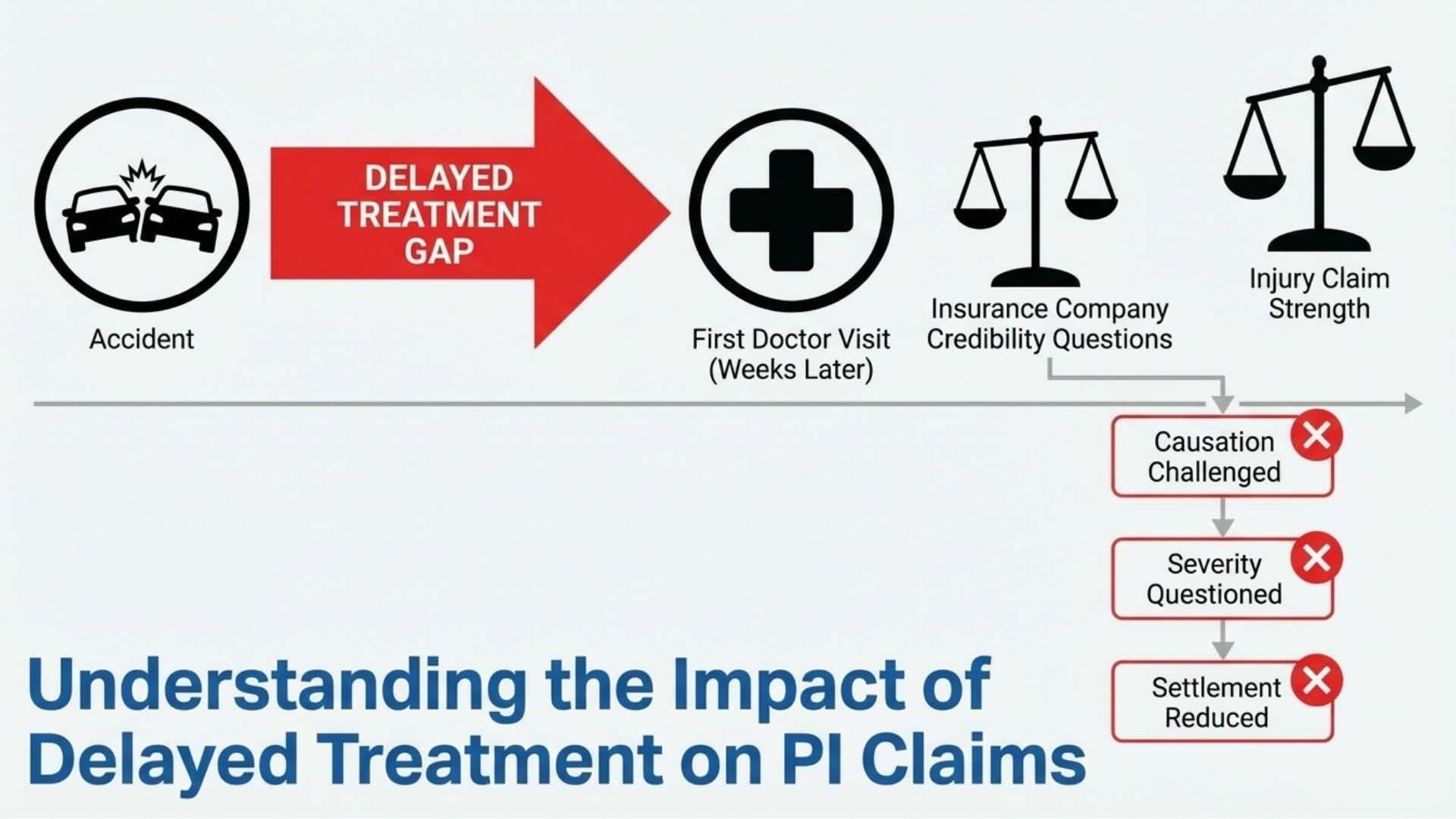
When injured individuals delay seeking medical care after an accident, insurance companies often question the credibility of the injury claim. Insurance adjusters often review the time gap between the accident and the first medical visit when assessing whether the injury claim is legitimate. If an injured individual waits days or even weeks before seeking medical care, insurers may argue that the injury developed later or resulted from an unrelated activity.
This issue plays a significant role in how delayed medical treatment affects injury claims during settlement negotiations. Insurance companies often use treatment delays to challenge causation, question the severity of injuries, or argue that certain medical treatments were unnecessary.
Understanding the impact of delayed medical treatment on settlement outcomes is therefore essential for attorneys and legal professionals handling personal injury claims. By recognizing how insurers interpret treatment timelines, legal teams can prepare stronger documentation strategies and improve the credibility of their cases.
Why Treatment Timing Matters in Personal Injury Cases
The timing of medical care is one of the first factors insurance companies examine when evaluating injury claims. Medical timelines provide a chronological record that helps determine when symptoms appeared and how the injury progressed over time.
When treatment begins immediately after an accident, physicians can document symptoms that are directly related to the incident. This documentation helps establish a clear causal relationship between the accident and the injury.
However, delayed medical treatment in personal injury cases can introduce uncertainty. If medical care begins long after the accident, insurers may argue that the injury was caused by another event. For example, they may claim that daily activities, work responsibilities, or physical exercise caused the injury rather than the accident itself.
Because settlement negotiations rely heavily on documented medical evidence, the timing of treatment often becomes a critical factor in determining the strength of an injury claim.
Common Situations That Lead to Delayed Treatment
Although insurers often criticize treatment delays, there are many legitimate reasons why injured individuals do not immediately seek medical care after an accident.
Common situations include:
- Symptoms that appear gradually after the accident
- Adrenaline masking the severity of injuries
- Limited access to medical care immediately after the incident
- Financial concerns about medical expenses
Some injuries, particularly soft-tissue injuries or spinal conditions, may not produce intense symptoms immediately. Pain and inflammation often develop gradually over several days.
For example, in many car accident cases involving whiplash injuries, patients may initially feel only mild discomfort. As inflammation increases over the following days, neck stiffness and pain may become significantly worse. When symptoms intensify, the injured person may finally seek medical attention.
Even though delayed symptoms are medically common, insurance companies sometimes attempt to use these delays to question the credibility of an injury claim.
Common Documentation Problems Related to Delayed Medical Treatment
Common documentation problems in personal injury cases often include:
- Delayed medical evaluation following the accident
- Missing diagnostic imaging reports such as MRI or CT scans
- Inconsistent physician notes across multiple healthcare providers
- Gaps in the medical treatment timeline
When these issues appear in clinical records, insurance companies may question whether the injury is directly connected to the accident.
Medical documentation challenges are more common than many people realize. Personal injury treatment often involves multiple providers, including emergency departments, specialists, imaging centers, and rehabilitation clinics. Without careful coordination, treatment records may become inconsistent or incomplete.
These documentation gaps can complicate settlement negotiations and provide opportunities for insurers to challenge the claim.
How Delayed Medical Treatment Affects Injury Claims
Insurance companies rely heavily on medical timelines when determining the value of injury claims. When delayed medical treatment occurs, adjusters often analyze the situation carefully to determine whether the available evidence supports the claim.
Questioning Causation
One of the most common arguments used by insurers involves causation. When treatment begins long after an accident, insurance companies may argue that the injury occurred later or was caused by another activity.
For example, if a patient waits several weeks before visiting a physician, insurers may claim that the injury resulted from work activities, exercise, or unrelated incidents rather than the accident itself.
Challenging Injury Severity
Delayed treatment can also affect how insurers interpret the seriousness of an injury. Insurance companies often argue that individuals with severe injuries typically seek medical care immediately.
If treatment is delayed, insurers may claim that the injury was minor or that the medical care later received was unnecessary.
Reducing Settlement Value
The impact of delayed treatment on settlement negotiations can be significant. Because compensation often depends on documented medical evidence, treatment gaps may weaken the strength of the claim.
When insurers question the credibility of medical evidence, they may attempt to reduce the compensation offered to the injured individual.
How Insurance Companies Evaluate Treatment Delays
When reviewing injury claims that involve delayed treatment, insurance adjusters typically follow a structured evaluation process. These evaluations often focus on several key factors:
- the time between the accident and the first medical visit
- whether symptoms were documented soon after the incident
- consistency of treatment following the initial medical evaluation
- diagnostic evidence confirming the injury
Insurance industry analyses frequently cite delayed medical treatment as a common reason for disputes in personal injury claims. Treatment gaps longer than one or two weeks are often carefully scrutinized by insurers during claim evaluations.
When medical timelines appear inconsistent, insurance companies may request additional documentation or attempt to challenge the validity of the claim.

Legal Strategies for Addressing Delayed Treatment
Attorneys often rely on structured medical record review to identify gaps in treatment timelines and ensure that medical documentation supports the injury claim. Careful analysis of treatment records can help legal teams clarify when symptoms began and how the injury progressed after the accident.
Documenting Symptom Progression
Some injuries worsen gradually after an accident. Medical documentation that explains how symptoms developed over time can help clarify why treatment did not begin immediately.
Gathering Objective Medical Evidence
Diagnostic imaging such as MRIs, CT scans, and X-rays can provide objective confirmation of injuries. Even when treatment begins later, imaging results may demonstrate physical damage that supports the claim.
Law firms often perform detailed medical record review for personal injury cases to identify missing documentation and organize treatment timelines.
Explaining the Reason for the Delay
Attorneys may also provide context explaining why treatment was delayed. Factors such as limited access to medical care, transportation issues, or delayed symptom onset can help clarify the situation.
When these explanations are supported by documentation, the credibility of the claim may remain intact.
Maintaining Consistent Medical Documentation
Consistent and detailed records including pain levels, physical limitations, and treatment responses support delayed medical treatment claims and demonstrate ongoing impact from the injury.
Once treatment begins, maintaining consistent medical documentation becomes extremely important. Physicians should record symptoms, treatment plans, and recovery progress throughout the entire treatment process.
Consistent treatment records help demonstrate that the injury continued to affect the patient over time. Documentation describing pain levels, physical limitations, and treatment responses can strengthen the credibility of the injury claim.
Learn more about how treatment oversight coordination helps attorneys maintain accurate medical timelines in personal injury cases.
Conclusion
Delayed medical treatment does not automatically weaken a personal injury claim. With proper documentation, explanation for delays, and consistent records, attorneys can address credibility concerns, protect claim value, and improve settlement outcomes.
For legal professionals handling personal injury cases, understanding how delayed medical treatment affects claims is essential for building stronger case strategies and achieving fair settlements.