
In personal injury cases, the strength of a claim often depends on whether medical records clearly support the cause, severity, and progression of the injury. Insurance companies, defense attorneys, and courts closely review medical documentation to determine whether the reported condition is truly connected to the accident.
When records are consistent and treatment begins promptly, it becomes easier to establish causation and support the legitimacy of the claim. However, when medical documentation contains inconsistencies, gaps, or conflicting details, that connection becomes easier to challenge.
In many cases, these inconsistencies are not the result of intentional error. They often develop when treatment is spread across multiple providers, timelines, and documentation styles. Even when the differences seem medically minor, they can still create significant problems during claim evaluation.
Insurers often use conflicting medical records to question credibility, dispute injury severity, and reduce settlement value. For that reason, understanding how medical record inconsistencies affect personal injury claims is essential to building a stronger legal strategy.
What Are Medical Record Inconsistencies in PI Cases?
Medical record inconsistencies in PI cases refer to differences, contradictions, or gaps in how injuries, symptoms, diagnoses, or treatment histories are documented across providers. These inconsistencies may appear when one provider records symptoms differently from another, when diagnoses do not align, or when treatment timelines create confusion about how the injury developed after the accident.
In personal injury claims, even minor documentation differences can create credibility issues, complicate causation analysis, and reduce overall settlement value.
Why Consistency in Medical Documentation Matters in PI Cases
Consistency in medical documentation is essential in personal injury cases because it helps establish a clear, credible record of how an injury developed after an accident. When symptoms, diagnoses, and treatment progression are documented consistently across providers, the medical timeline becomes easier to follow and defend.
That consistency strengthens causation by showing that the reported condition is directly connected to the incident and that the treatment provided was appropriate and medically necessary. It also gives insurers, attorneys, and other reviewers less room to question the legitimacy of the claim.
By contrast, inconsistent documentation can disrupt that narrative. Differences in symptom descriptions, diagnostic language, or treatment notes may be treated as contradictions, even when they reflect normal clinical variation.
Because settlement outcomes often depend on how reliable and coherent the medical evidence appears, consistency in documentation can directly influence both claim credibility and case value.
Common Types of Medical Record Inconsistencies in PI Cases
Common types of medical record inconsistencies in PI cases tend to appear in predictable ways across treatment documentation. These issues often become more noticeable when records are reviewed by insurers, defense counsel, or legal teams looking for weaknesses in causation and injury presentation.
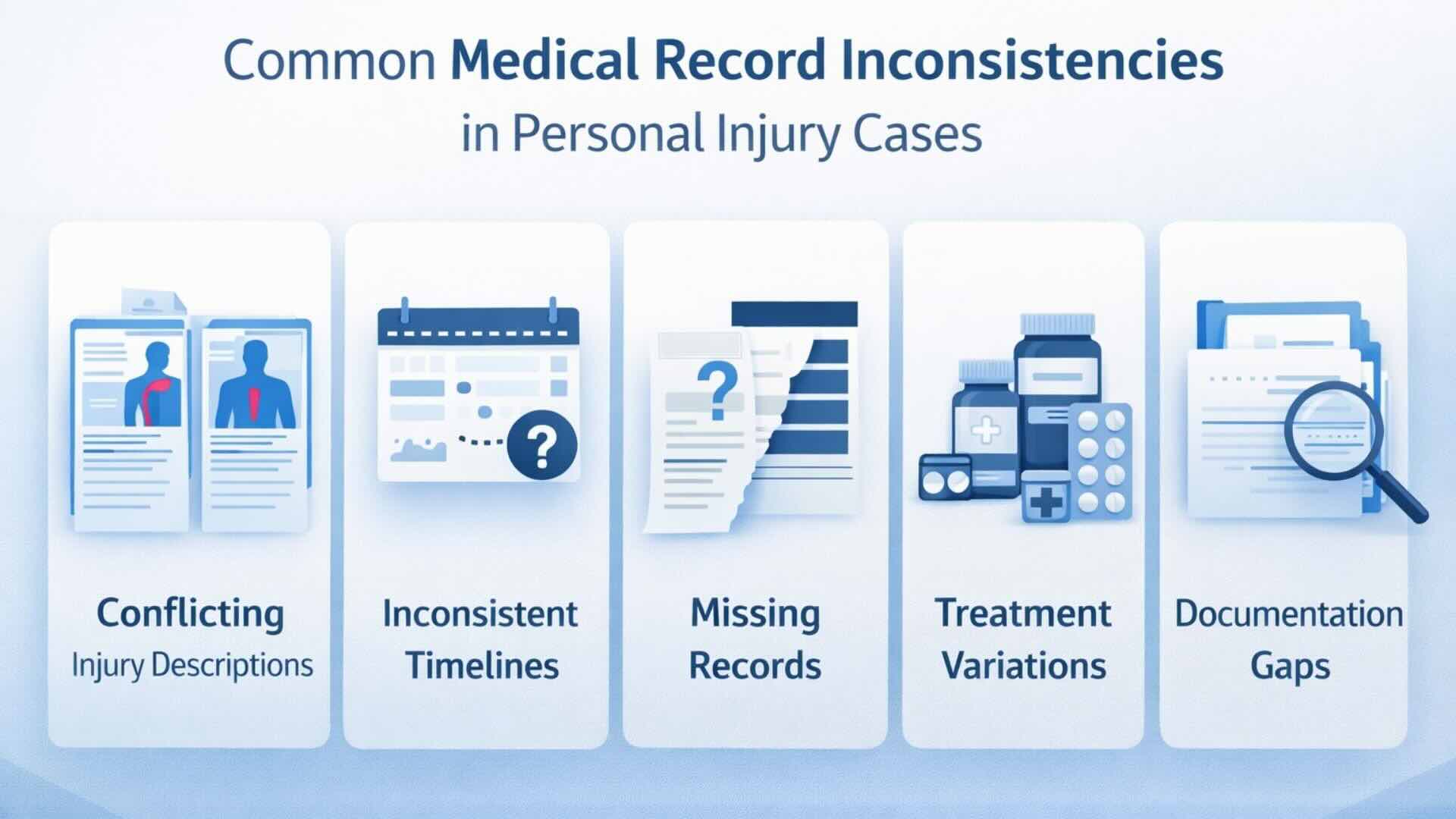
The most common medical record inconsistencies in PI cases include:
- conflicting injury descriptions between providers
- inconsistent symptom reporting across treatment visits
- diagnoses that do not align with the treatment timeline
Each of these discrepancies can create doubt about how the injury developed, how serious it is, and whether the documented treatment supports the claim being made.
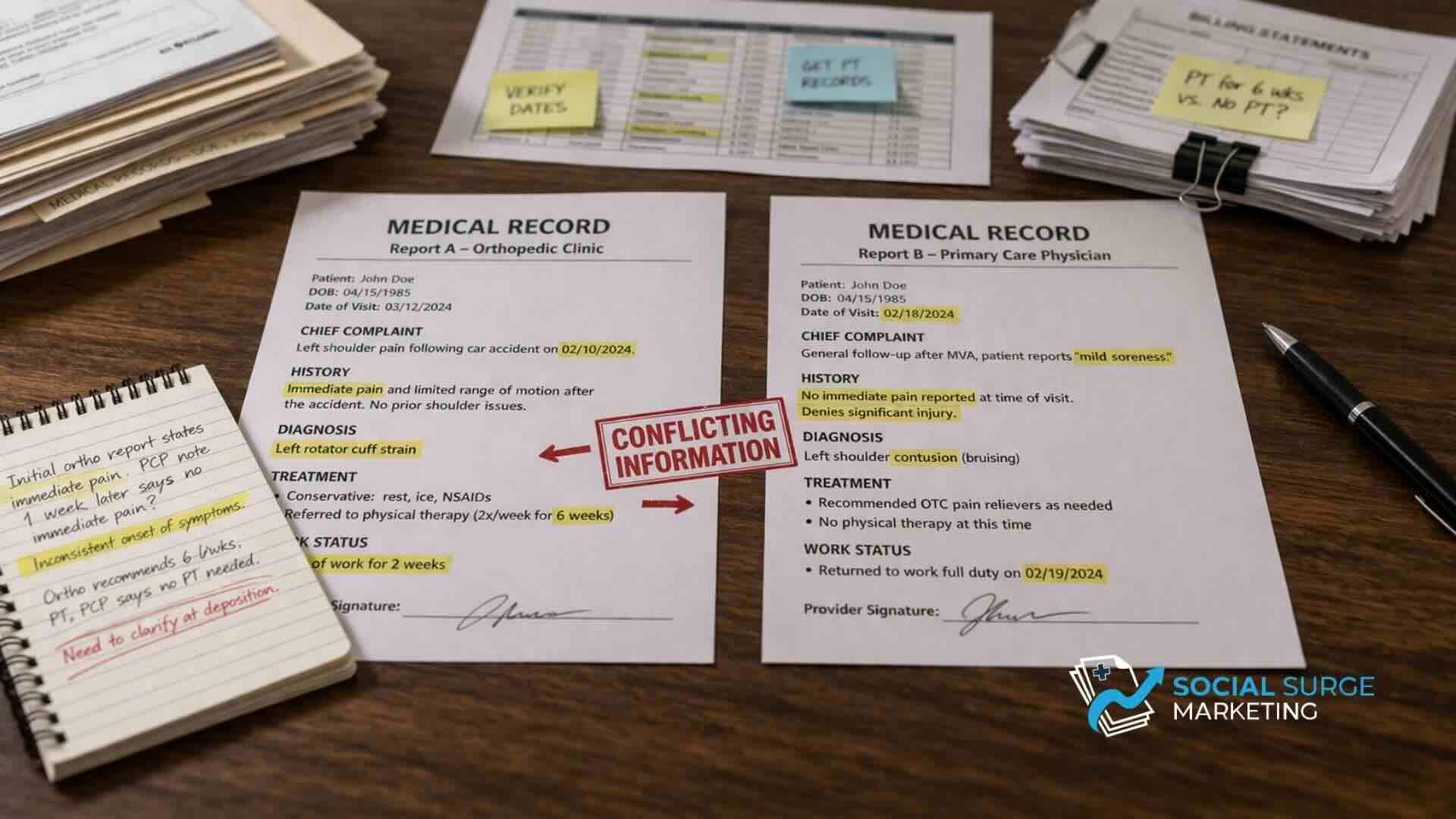
In many cases, these inconsistencies do not result from improper care. They often arise because different providers document different aspects of the same injury. For example, a specialist may focus on structural findings, while a therapist documents pain levels or functional limitations. Although both records may be medically valid, the variation can still appear contradictory in a legal review.
Recognizing these patterns early helps legal teams identify documentation weaknesses before they are used to challenge credibility, causation, or settlement value.
How Medical Record Inconsistencies in PI Cases Affect Injury Claims
Inconsistencies in medical records can significantly affect how insurers evaluate the strength of a personal injury claim. When documentation does not present a clear and consistent medical narrative, insurers are more likely to question causation, dispute the seriousness of the injury, and reduce the overall value of the claim.
Questioning Causation
One of the most common consequences of inconsistent documentation is a challenge to causation. If medical records describe the injury differently across providers or visits, insurers may argue that the condition is not directly tied to the accident.
Conflicting medical records can also be used to suggest that the injury developed later, was aggravated by another event, or is connected to a pre-existing condition rather than the incident at issue.
Challenging Injury Severity
Inconsistencies can also weaken how injury severity is perceived. If one provider documents severe pain, functional limitations, or ongoing symptoms while another record describes the condition less clearly, insurers may question whether the injury is as serious as claimed.
Even when the patient’s condition has not materially changed, differences in documentation style can create the impression that the symptoms are overstated or medically unsupported.
Reducing Settlement Value
When medical records appear inconsistent or unreliable, settlement value often declines. Insurers may lower offers, delay negotiations, or take a more aggressive position during claim review because the documentation gives them more room to dispute the case.
Since medical evidence plays a central role in claim valuation, even relatively minor inconsistencies can create financial consequences when they affect credibility, causation, or the perceived seriousness of the injury.
What Causes Conflicting Medical Reports in PI Cases
Most conflicting medical reports in PI cases do not result from clinical error. More often, they develop because modern medical treatment is spread across multiple providers, specialties, and stages of recovery, each with its own documentation priorities.
Common causes include:
- treatment across multiple providers with different documentation styles
- limited communication between healthcare providers
- symptoms that evolve over time and are recorded differently at different stages of recovery
Each provider documents the injury from a specific clinical perspective. A specialist may focus on diagnostic findings, while a physical therapist documents pain levels, mobility restrictions, or functional limitations. Even when both records are medically accurate, the variation can appear inconsistent during legal review.
Changes in symptoms can also contribute to conflicting documentation. As an injury progresses, symptoms may shift in severity, location, or presentation, leading providers to record different findings even when the underlying condition remains the same.
In a personal injury case, these differences can create confusion if the records are not reviewed and interpreted in context.
How Insurance Companies Use Conflicting Medical Records in Injury Lawsuits
During claim review, insurance companies routinely search medical records for inconsistencies that can be used to challenge the strength of a personal injury claim. Even relatively minor discrepancies may be used to question whether the injury is truly related to the accident or whether the medical documentation presents a reliable account of the condition.
When conflicting details appear in the record, insurers may argue that the injury stems from another cause, developed later, or is not supported by a consistent treatment history. These arguments are often used to justify lower settlement offers, delay negotiations, or increase pressure during claim evaluation.
In more complex cases, insurers may also rely on independent medical reviewers or defense experts to examine the records and identify weaknesses in causation, symptom progression, or treatment necessity.
For a closer look at how documentation inconsistencies are used strategically in claim defense, see our related analysis on how defense attorneys exploit documentation weaknesses in personal injury cases.
Because insurers often use even minor conflicts in the record to weaken leverage, legal teams benefit from identifying and addressing these issues as early as possible.
Identifying Medical Record Inconsistencies Early in the Case
Identifying medical record inconsistencies early in the case is essential to reducing problems later in the claims process. When documentation issues are discovered early, legal teams have more time to review the records, clarify discrepancies, and protect the integrity of the medical narrative before negotiations or litigation become more aggressive.
Attorneys typically begin by reviewing medical records for differences in diagnoses, symptom descriptions, treatment progression, and provider documentation. This process helps determine whether the records support a clear and consistent account of how the injury developed after the accident.
Many law firms rely on structured medical record review systems to improve organization, identify contradictions, and strengthen case preparation. A systematic review process can also help distinguish true documentation problems from normal clinical variation between providers.
By identifying inconsistencies early, legal teams can address potential weaknesses before they affect causation arguments, settlement discussions, or overall claim value.
Strategies to Address Medical Record Inconsistencies
Even when inconsistencies appear in medical records, they can often be addressed through a structured review process. The goal is to clarify documentation issues before they weaken causation, credibility, or settlement value.
Creating a Clear Medical Timeline
Organizing records chronologically helps show how the injury developed and how treatment progressed over time. It also helps legal teams identify where documentation conflicts begin and how they affect the overall medical narrative.
Using Medical Expert Analysis
Medical experts can review conflicting records and determine whether the differences are clinically significant or simply normal variations in documentation. This can be especially important in complex cases involving multiple providers or evolving symptoms.
Clarifying Documentation with Providers
Attorneys may seek clarification from healthcare providers when key discrepancies appear in the record. Clear explanations can help resolve confusion and improve consistency across the documentation.
These efforts are often strengthened by coordinated record review and treatment oversight systems that support accurate and consistent documentation throughout the case.
The Role of Medical Experts in Resolving Conflicts
Medical experts help resolve medical record inconsistencies in PI cases by interpreting conflicting documentation in clinical context. Their role is to determine whether differences in the record reflect true contradictions or normal variation in how providers document the same injury.
Experts can explain why providers may describe symptoms, diagnoses, or treatment differently while still documenting the same underlying condition. In complex cases, this analysis can support causation, clarify treatment necessity, and strengthen the overall medical narrative.
This type of expert review becomes especially important when insurers use documentation conflicts to challenge credibility or reduce claim value.
Why Even Minor Documentation Inconsistencies Can Impact a Claim
Even minor documentation inconsistencies can influence how a PI claim is evaluated. Insurers often treat repeated differences in wording, symptom reporting, or diagnosis as signs that the medical record is less reliable.
For example, a change from “neck pain” to “cervical strain with radiating symptoms” may be clinically understandable, but in litigation it can still raise questions about consistency, diagnosis, and injury progression.
When these discrepancies appear throughout the record, they can weaken credibility, complicate causation, and reduce settlement value.
How to Prevent Medical Record Inconsistencies in PI Cases
Preventing documentation inconsistencies early is more effective than trying to correct them later in the case. Early organization and review help preserve a consistent medical narrative before claim evaluation becomes more adversarial.
Legal teams can reduce risk by:
- collecting complete records early
- monitoring documentation throughout treatment
- maintaining clear communication during record collection and case review
- reviewing records for consistency in symptoms, diagnoses, and treatment progression
When documentation is organized and reviewed from the outset, legal teams are better positioned to protect credibility, support causation, and reduce the risk of conflicting medical reports.
Conclusion
Medical record inconsistencies in PI cases can weaken a claim in ways that are not always immediately obvious. Even minor conflicts in documentation may affect causation analysis, reduce credibility, and give insurers more room to challenge injury severity or lower settlement value.
Because insurance companies often use inconsistent medical records to question the reliability of a claim, early review and clarification are essential. Structured record analysis, clear medical timelines, and expert support can help legal teams identify documentation weaknesses before they become larger problems during negotiation or litigation.
For personal injury attorneys, addressing medical record inconsistencies early is not just a matter of organization. It is a practical step toward building a stronger, more defensible case supported by clear and credible medical evidence.