

In personal injury cases, traumatic brain injuries are among the most difficult conditions to document and evaluate. Unlike fractures or visible trauma, brain injuries rely on clinical observations, diagnostic findings, and symptom progression documented over time. For that reason, the strength of a TBI claim largely depends on how clearly the medical records document the injury and track its progression.
Insurance companies and defense attorneys closely evaluate whether the medical records establish a clear connection between the accident and the documented neurological condition. Detailed, consistent, and medically supported documentation creates a strong foundation for establishing causation and damages. When records are incomplete or inconsistent, even valid claims may face unnecessary scrutiny.
For attorneys handling TBI cases, knowing exactly what the records must show is critical to building a defensible and medically credible claim.
Why Medical Documentation Is Critical in TBI Cases
Traumatic brain injuries are often difficult to diagnose and even more difficult to prove in a legal context. Symptoms such as headaches, confusion, dizziness, and cognitive impairment may not appear immediately after an accident. In many cases, they develop gradually and change over time.
As a result, the records should establish a clear and medically supported timeline linking the incident to the onset and progression of symptoms. Without a structured timeline, proving causation becomes significantly more difficult.
Strong medical documentation serves several critical functions:
- establishing a direct link between the accident and the neurological condition
- showing how symptoms developed and progressed over time
- supporting the need for ongoing treatment and long-term care
If these elements are missing or unclear, insurers may argue that the symptoms were unrelated to the incident or tied to a pre-existing condition instead.
What Medical Records Should Show in TBI Claims
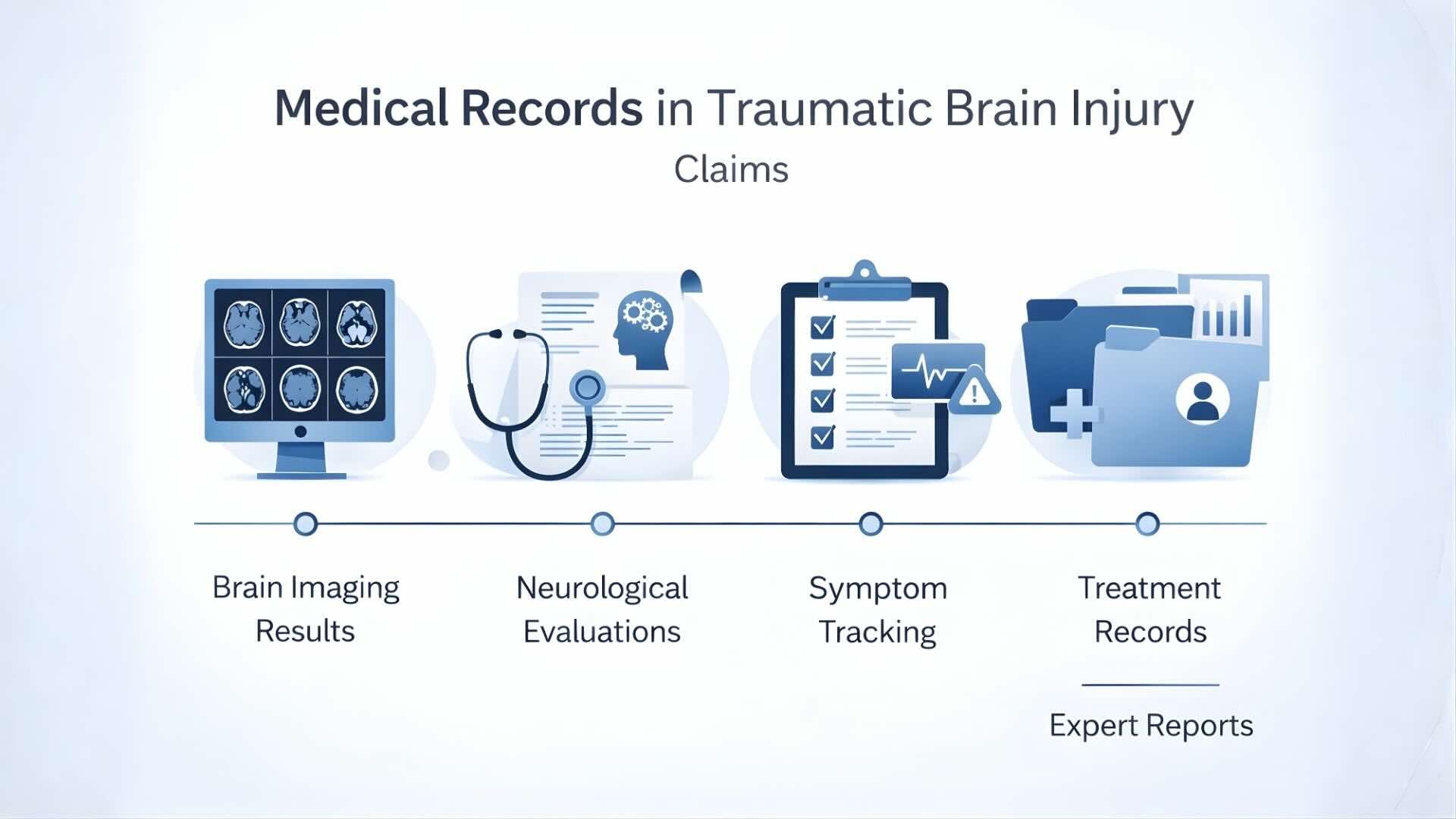
In traumatic brain injury claims, medical records should clearly show how the injury occurred, what symptoms were documented, what clinical findings support the diagnosis, how treatment progressed, and how the injury affects daily functioning.
What Medical Records Should Clearly Demonstrate
For a traumatic brain injury claim to remain credible, the documentation should present a clear and medically consistent record from the initial injury through recovery.
Initial Injury Documentation and Early Symptoms
Early records are especially important because they are often the first evidence linking the accident to the injury. Emergency room reports, paramedic notes, and initial physician evaluations should clearly describe how the injury occurred and what symptoms were present.
A delay in recording symptoms does not automatically weaken a claim, but it can raise avoidable questions if not properly explained within the medical timeline.
Diagnostic Findings and Clinical Evidence
Objective clinical findings are often the strongest form of supporting evidence in a traumatic brain injury claim. While imaging does not always reveal visible damage, CT scans, MRIs, and neurological assessments can provide meaningful support.
In addition to imaging, clinical observations such as balance issues, cognitive impairment, and neurological abnormalities should be documented consistently across visits.
Symptom Progression Over Time
Symptoms associated with traumatic brain injuries often change over time rather than remaining fixed from the start. Instead of relying on a single evaluation, documentation must reflect how the condition evolves.
For example, a patient may initially report mild headaches and later develop memory difficulties or reduced concentration. When symptom progression is clearly documented, it strengthens the overall medical record and supports the long-term impact of the injury.
Functional and Cognitive Impact
Beyond diagnosis, medical records in traumatic brain injury claims must reflect how the injury affects daily life. This includes limitations in concentration, memory, job performance, and routine activities.
Clearly documented limitations provide a more reliable basis for assessing damages and long-term consequences.
Common Gaps in TBI Injury Documentation Requirements
Even a legitimate TBI claim may lose strength when documentation contains gaps. These issues often arise unintentionally but can create serious legal challenges.
Common problems in TBI injury documentation requirements include:
- delayed reporting of symptoms after the accident
- incomplete neurological evaluations during early treatment
- inconsistent follow-up documentation across providers
These gaps can make it harder to establish a direct connection between the injury and the accident. In many situations, symptoms are not immediately recognized, or treatment is spread across multiple providers.
From a legal perspective, however, any missing or inconsistent detail in medical records in traumatic brain injury claims may be used to challenge credibility.
How Medical Evidence Supports Causation in TBI Claims
In traumatic brain injury cases, causation is often the primary issue that insurers and defense attorneys challenge. Symptoms are often challenged as unrelated or attributed to pre-existing conditions.
To establish causation, documentation must clearly connect the injury mechanism with the documented condition.
Mechanism of Injury
Medical records should clearly explain how the accident could have caused a brain injury, including direct impact, sudden acceleration, or rotational forces.
When the mechanism of injury is clearly documented, it becomes much easier to show that the condition is medically consistent with the event.
Timing of Symptoms
The timing of symptoms is critical. Documentation should show that symptoms appeared within a medically reasonable timeframe.
When symptoms appear later, the records should explain how delayed onset aligns with recognized patterns of brain injury.
Consistency Across Providers
Consistency across multiple providers reinforces credibility. When physicians document similar findings over time, it reduces doubt and strengthens the overall narrative.
Taken together, these elements make the records far more persuasive when causation is being challenged.
The Role of Specialists in TBI Documentation
Traumatic brain injuries often require input from multiple specialists. Neurologists assess brain function, neuropsychologists evaluate cognitive impact, and rehabilitation specialists document recovery.
Each provider contributes a different layer of information. When these perspectives align, they create a comprehensive and medically supported record.
However, when documentation varies significantly between providers, it can introduce confusion and weaken the claim. Coordinated documentation helps maintain clarity and consistency throughout the case.
Many legal teams rely on structured medical record review to ensure the documentation remains consistent and supports the claim as a whole.
How Insurance Companies Evaluate TBI Medical Records
Insurance companies carefully review TBI records because many symptoms are subjective and may not appear clearly on imaging studies.
They typically evaluate whether documentation:
- remains consistent across treatment records
- is supported by clinical findings
- aligns with the reported mechanism of injury
Even small inconsistencies can be used to question credibility or reduce settlement value, especially when reviewing common documentation weaknesses that appear in injury claims.
In more complex cases, insurers may request independent medical evaluations designed to identify weaknesses or inconsistencies in the documentation. For this reason, any lack of clarity in medical records in traumatic brain injury claims can directly influence how the case is valued.
How to Strengthen TBI Medical Documentation
Strong documentation depends on consistent follow-up, early evaluation, and close coordination between treating providers and the legal team.
Maintain Consistency Throughout Treatment
Regular visits and consistent reporting help establish a reliable timeline and reduce ambiguity in the record.
Prioritize Early Evaluation
Early neurological assessment provides a baseline that connects the injury to the accident. Delays in diagnosis often create avoidable complications.
Ensure Coordination Between Providers
When multiple providers are involved, consistent terminology and aligned findings help prevent contradictions and improve clarity.
These practices help ensure that documentation remains consistent and defensible throughout the claim process, and many firms rely on coordinated support systems available through Social Surge Marketing to maintain alignment across providers.
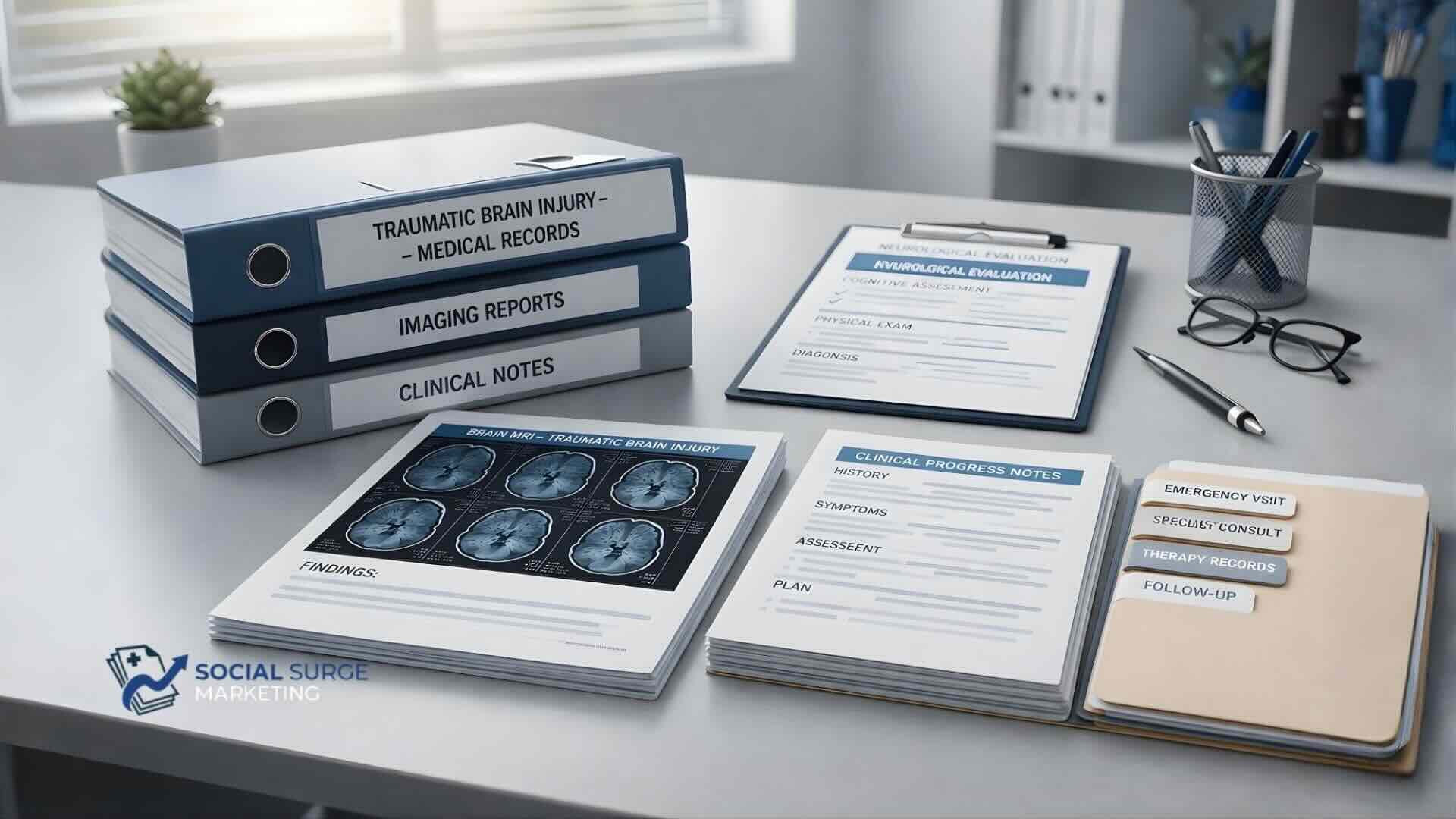
The Long-Term Impact of Proper Documentation
Traumatic brain injuries often have lasting effects that extend beyond initial treatment. Proper documentation ensures that these long-term consequences are fully recognized and accurately evaluated.
Medical records should reflect ongoing cognitive challenges, behavioral changes, and functional limitations. This level of detail plays a direct role in how future medical needs and long-term damages are assessed.
Without clear and consistent documentation, the long-term impact of the injury may be underestimated, which can result in reduced settlement outcomes.
Conclusion
In traumatic brain injury litigation, the outcome of a claim often depends more on how clearly the injury is documented than on the diagnosis alone. Medical records in traumatic brain injury claims should clearly demonstrate a consistent connection between the accident, symptoms, and long-term impact.
When documentation is detailed, aligned, and medically supported, it becomes one of the strongest tools for proving causation and damages. When gaps or inconsistencies appear, they create doubt that insurers can use to challenge the claim.
For attorneys handling these cases, understanding TBI injury documentation requirements and maintaining high-quality records often determines whether a claim is reduced or fully supported, resulting in fair compensation.