Determining when to involve a medical expert in a personal injury case is a crucial strategic decision for PI attorneys, shaping the defensibility and overall structure of a claim. Complex cases, especially those involving catastrophic injuries or multiple specialties, require careful coordination of medical records to ensure that every step of treatment is documented and clearly linked to the legal strategy.
In this article, we explore how properly sequencing medical records, identifying documentation gaps, and maintaining structural clarity can strengthen a case and reduce vulnerabilities during evaluation. You’ll gain insights into how a medical expert can help transform fragmented records into a cohesive, attorney-ready framework, highlighting potential weaknesses before they affect negotiations or trial.
For practitioners navigating Texas litigation, understanding these operational and strategic considerations can make the difference between a defensible case and one that risks delays or challenges.
Sequencing of Medical Records
In complex personal injury matters, chronological sequencing is not administrative housekeeping; it is structural engineering. When care is delivered across emergency rooms, specialists, imaging centers, and rehabilitation providers, fragmentation is almost inevitable. That fragmentation is where defense counsel looks first.
A medical expert in personal injury litigation becomes relevant when the treatment timeline no longer speaks for itself. Narrative breaks, unexplained delays, and overlapping provider notes can distort causation and inflate perceived inconsistencies. Without structured sequencing, even legitimate injuries can appear clinically unstable.
Identifying Timeline Breaks
Sequencing failures typically show up in predictable ways:
- Gaps between initial trauma and specialist follow-up.
- Imaging performed without a corresponding treatment rationale.
- Surgical recommendations that lack a documented history of conservative care.
- Therapy notes that do not clearly reference objective findings.
- Multiple providers documenting symptoms differently without reconciliation
When records are intentionally ordered and cross-referenced, the timeline begins to reinforce itself. This is where a structured review of the medical file becomes pivotal. Rather than reacting to inconsistencies during discovery, the file can be engineered early, ensuring that each phase of treatment logically supports the next.
Effective sequencing transforms a scattered record set into a defensible clinical progression. It allows the legal theory and the medical narrative to move in parallel, reducing opportunities for timeline attacks and preventing avoidable credibility erosion.
Documentation Gaps
Documentation gaps are never neutral. Missed appointments, delayed reports, or unrecorded care can quickly become leverage for the defense. The role of medical expert witness in PI cases begins with an early structural review, identifying true interruptions in care versus documentation failures such as unfiled reports or incomplete therapy notes.
Common structural gap patterns include:
- Delays between injury and specialist referral without contextual explanation
- Imaging was performed weeks after symptom escalation with no interim notes
- Conservative care attempts that are not properly documented before surgery
- Therapy progress notes that fail to reflect functional limitation trends
- Provider transitions that lack summary documentation
When these gaps are identified early, they can be corrected, contextualized, or strategically addressed before they are discovered. When they are ignored, they become narrative fractures.
Medical Record Audit Clarity
Audit clarity ensures a medical file is internally consistent and transparent. A “clean” file links each diagnosis to the corresponding treatment and justifies every intervention. Understanding when to involve a medical expert in a PI case is essential to spot inconsistencies, conflicting notes, or missing documentation that could weaken credibility.
A medical expert in personal injury litigation confirms treatments were necessary, ensures records are complete, and translates complex medical information into clear, attorney-ready summaries. Early expert involvement addresses vulnerabilities, maintains structural integrity, and streamlines the file, making the medical narrative easier to follow for attorneys and reviewers alike.

Structural Integrity
The structural integrity of a personal injury case relies on aligning medical evidence with the legal strategy. This is particularly challenging for “invisible” injuries, such as mild TBI or complex regional pain syndrome, where findings can be highly technical or disputed. Using expert testimony in personal injury claims strategically helps bridge this gap, connecting the accident to the claimed damages with professional authority.
The role of medical expert witness in PI cases extends beyond testifying. Experts help attorneys understand long-term impacts, from projected income loss to lifelong care needs. In complex cases, this often involves collaboration with multiple specialists.
For attorneys seeking guidance on coordinating these professionals effectively, we provide guidance on expert witness coordination for personal injury cases to ensure all files are organized and complete, allowing opinions to be accurate and persuasive.
Maintaining structural integrity also requires keeping the medical narrative consistent as the case evolves. When files are organized and professionally reviewed, attorneys can withstand cross-examination and conflicting opinions from the defense more confidently, preserving the case’s overall defensibility.
Structured vs. Disorganized Case Files
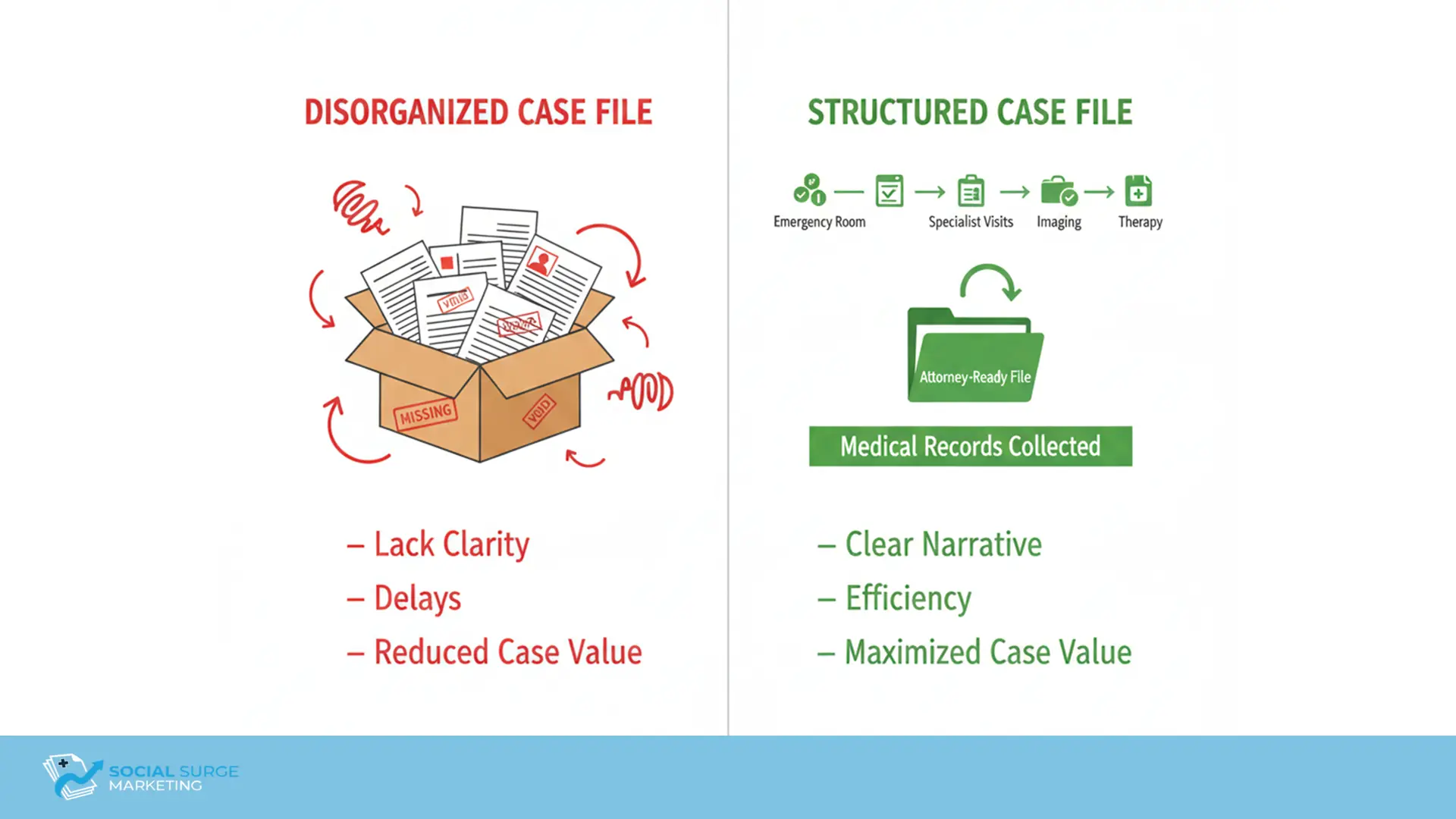
The difference between a structured and a disorganized case file often determines whether a claim proceeds smoothly or stalls. Disorganized files, like fragmented records, missing reports, and unclear treatment timelines, create significant risks for the legal team. They can delay critical evaluations, complicate accurate calculation of long-term damages, and give the defense openings to question the consistency or credibility of the claim.
A structured file, facilitated by timely medical expert involvement, provides a clear roadmap of injury and recovery.
For a PI attorney, this means:
- Faster clarity on injury details and treatment timelines, reducing time spent reconciling records.
- Lower administrative workload, allowing the legal team to focus on strategy and litigation planning.
- Consistent visibility into active treatment plans and recovery milestones.
- A coherent, defensible medical narrative that supports stronger case positioning and negotiation leverage.
Transitioning from a disorganized to a structured file requires knowing when to involve a medical expert in a PI case. Their early involvement ensures records are complete, sequenced, and cross-referenced with care plans. This preemptive structuring minimizes gaps, prevents misinterpretation of the evidence, and strengthens the overall defensibility of the case.
In practice, structured files not only make discovery and settlement smoother but also reduce the risk of surprises during cross-examination. By maintaining a disciplined, organized medical record, attorneys create a file that can withstand scrutiny, support expert testimony, and provide a solid foundation for case strategy.
Common Documentation Weaknesses
Even in seemingly straightforward PI cases, structural deficiencies in medical documentation can arise. Attorneys must be vigilant in spotting these weaknesses before they threaten the case’s momentum. Such deficiencies often stem from the high volume of records and involvement of multiple providers who may not communicate directly.
Common documentation weaknesses include:
- Inconsistent or incomplete treatment documentation across facilities.
- Fragmented records that fail to establish a continuous clinical narrative.
- Missing critical reports, such as operative notes, imaging studies, or neurological assessments.
- Failure to document functional limitations and the long-term impact of injuries on daily life.
- Treatment gaps that are not professionally explained within the medical context.
Identifying these issues early through the perspective of a medical expert in personal injury litigation allows attorneys to reinforce the case’s foundation. This proactive review ensures that expert testimony in personal injury claims rests on a robust and complete evidentiary record, reducing vulnerabilities and improving the defensibility of the claim.
Summary
The strategic timing of when to involve a medical expert in a PI case remains a cornerstone of effective personal injury practice in Texas. By focusing on the structural aspects of medical documentation, attorneys can build cases with stronger integrity and reduced administrative vulnerabilities.
At Social Surge Marketing, we help legal teams implement a structured, coordinated approach to medical-legal review, ensuring that every file supports a clear and defensible case strategy. The use of expert testimony in personal injury claims provides the professional authority necessary to establish causation, evaluate damages, and communicate complex medical findings in a clear, attorney-ready format.
Ultimately, adopting a disciplined, structured approach to medical records and expert coordination ensures that the narrative remains consistent, verifiable, and prepared to withstand scrutiny from defense counsel or adjusters, enhancing both the efficiency and effectiveness of the case from intake through resolution.