

How to choose a medical expert witness depends on evaluating clinical expertise, litigation experience, and communication skills. Attorneys should select an expert whose specialty matches the injury, has prior testimony experience, and can clearly explain medical findings. A structured review of medical records is also essential before choosing the right expert.
In many personal injury cases, knowing how to choose a medical expert witness can directly impact the outcome of a claim.
In personal injury litigation, medical evidence often determines whether a claim succeeds during settlement negotiations or proceeds to trial. Attorneys rely heavily on treatment records, diagnostic reports, and physician evaluations to demonstrate how an accident caused an injury. However, medical documentation can sometimes be difficult to interpret, particularly when injuries involve complicated diagnostic findings. In such situations, professional medical analysis is often required to determine whether the documented injury is consistent with the reported accident.
Due to the complexity of many injury claims, attorneys often rely on expert medical testimony to explain how an injury occurred and whether the available medical evidence supports the claim. Knowing how to choose a medical expert witness in personal injury cases is therefore a critical component of building a strong litigation strategy.
A qualified medical expert can analyze treatment timelines, evaluate diagnostic imaging, and explain whether the injury pattern is medically consistent with the accident. Their professional interpretation often helps courts and insurance companies understand complex medical information.
Selecting the right expert involves more than simply identifying a licensed physician with the relevant specialty. Attorneys must consider clinical expertise, courtroom experience, and the ability to communicate medical findings clearly. When legal teams carefully choose medical expert witness in PI cases, they significantly improve the credibility of the medical evidence presented in the claim.
Why Medical Experts Are Important in Personal Injury Cases
Medical experts play an essential role in explaining medical documentation within a legal context. Personal injury claims often involve large volumes of medical records that include physician notes, imaging studies, and treatment histories.
A medical expert witness in personal injury cases can interpret these records and determine whether they support the injury claim. Their analysis often focuses on several key issues.
- whether the accident caused the injury
- whether the treatment provided was medically appropriate
- whether the injury resulted in long-term limitations
Insurance companies frequently challenge injury claims by arguing that the condition existed before the accident or developed afterward. Expert testimony helps clarify whether the injury is medically consistent with the reported incident.
Several legal industry studies indicate that expert medical testimony is involved in more than 60% of contested personal injury cases, highlighting the importance of selecting a credible expert.
When attorneys carefully choose medical expert witness in PI cases, they strengthen the medical foundation of the claim and improve the likelihood that the evidence will be interpreted correctly.
When Is a Medical Expert Witness Needed in Personal Injury Cases?
Not every personal injury claim requires expert medical testimony. In straightforward cases involving minor injuries, medical records alone may be sufficient.
However, expert analysis becomes particularly valuable in more complex situations.
Cases involving spinal injuries, neurological conditions, or orthopedic complications often require specialized interpretation.
Expert evaluation is also useful when treatment timelines appear inconsistent. Delayed symptoms, gaps in care, or multiple providers can create uncertainty.
In addition, when defense attorneys introduce their own medical experts, presenting a qualified expert becomes essential.
Attorneys who know how to choose a medical expert witness can ensure that expert testimony strengthens rather than complicates the case.

Key Qualifications to Look for in a Medical Expert
Selecting a medical expert for litigation requires a careful review of the expert’s clinical background, professional credentials, and prior experience providing testimony in legal cases. Several specific qualifications can help attorneys determine whether a medical expert will provide credible and effective testimony in litigation.
Relevant Clinical Experience
The expert’s medical specialty should directly relate to the injury involved in the case. For example, spinal injuries may require evaluation by orthopedic surgeons or neurologists.
Experts who regularly treat similar conditions are more likely to provide accurate medical opinions.
Litigation Experience
Medical experts who have previously testified in legal cases usually understand courtroom procedures and expectations. They are typically better prepared to respond to depositions and cross-examination.
Communication Skills
The ability to explain complex medical information clearly is extremely important. Judges, juries, and insurance adjusters may not have medical backgrounds, so the expert must communicate medical findings in understandable language.
Attorneys who carefully choosing a qualified medical expert often prioritize these qualities to ensure that expert testimony is persuasive and credible.
Common Mistakes When Selecting a Medical Expert
Although expert testimony can strengthen an injury claim, choosing the wrong expert may create significant challenges during litigation.
One common mistake involves choosing an expert whose specialty does not match the injury involved in the case. Defense attorneys frequently challenge experts whose qualifications appear unrelated to the medical condition being evaluated.
Another mistake occurs when attorneys rely on experts who provide overly aggressive medical opinions. Exaggerated claims can damage credibility if opposing experts present contradictory evidence.
A third common issue involves selecting experts before fully reviewing the available medical records. Without understanding the treatment timeline, attorneys may choose an expert whose specialty does not align with the medical issues in the case.
Many law firms begin this process by conducting a detailed review of medical documentation.
This type of structured record review helps determine which medical specialty is most appropriate for expert analysis.
Attorneys who understand how to choose medical expert witness in PI cases avoid these mistakes and ensure that expert testimony strengthens the case.
How Medical Experts Evaluate Injury Claims
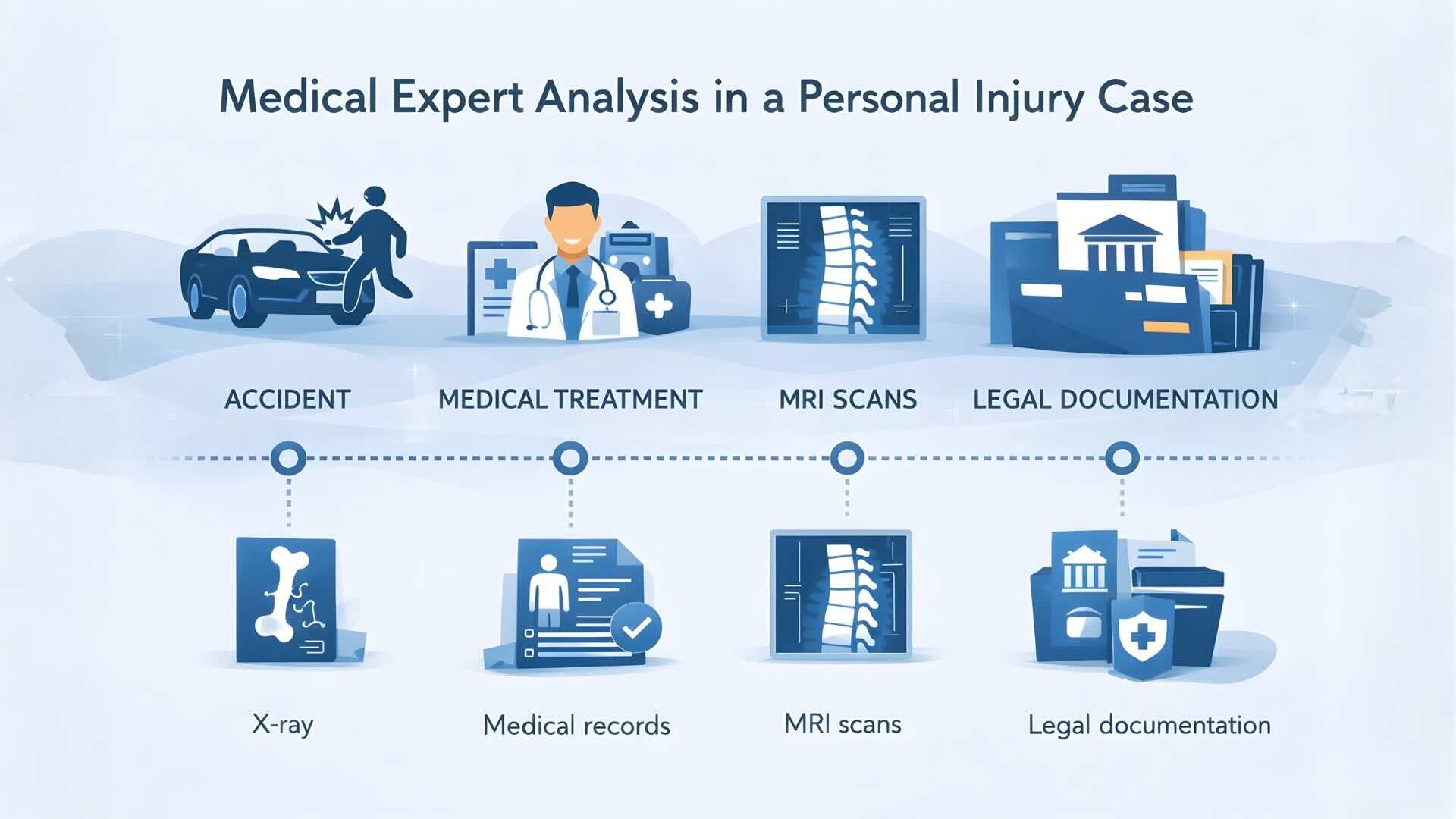
When reviewing injury claims, medical experts usually follow a structured evaluation process. Their analysis begins with a detailed examination of treatment records, physician notes, and diagnostic imaging.
Experts compare the medical findings with the reported mechanism of injury to determine whether the documentation supports the claim.
The process of medical expert evaluation injury claims often focuses on several critical factors.
- consistency between the accident and the documented injury
- progression of symptoms in treatment records
- objective diagnostic findings confirming the injury
Diagnostic imaging such as MRI scans, CT imaging, and X-rays often play a significant role in this analysis. These objective findings help confirm whether a physical injury occurred.
When attorneys properly choose medical expert witness in PI cases, the expert’s structured evaluation can clarify complex medical evidence and strengthen the claim.
The Role of Medical Experts in Settlement Negotiations
Medical experts influence more than courtroom testimony. Their analysis often plays a major role during settlement negotiations.
Insurance companies carefully evaluate medical documentation when determining the value of an injury claim. When expert opinions support the connection between the accident and the injury, settlement discussions may become more productive.
Expert reports can also explain long-term medical consequences, including permanent impairment or the need for future treatment.
Legal teams often coordinate expert evaluation with treatment documentation oversight to ensure medical timelines remain accurate throughout the case.
Maintaining organized treatment timelines helps ensure that medical evidence remains consistent throughout the case.
How Expert Testimony Strengthens Injury Claims
Expert testimony can strengthen injury claims in several important ways.
First, experts help establish causation by explaining how the accident produced the documented injury.
Second, experts confirm injury severity by interpreting diagnostic imaging and physician evaluations.
Third, expert testimony helps address arguments raised by defense attorneys.
- clarifying inconsistencies in medical documentation
- explaining delayed symptoms or treatment gaps
- reinforcing the relationship between the accident and the injury
Defense attorneys frequently attempt to identify weaknesses in medical documentation when disputing injury claims. A detailed explanation of these strategies can be found in this article: https://socialsurgemarketing.us/blog/documentation-weaknesses-defense-attorneys-exploit/
Choosing Experts Who Strengthen Case Credibility
The most credible medical experts provide objective, evidence-based opinions that are supported by detailed medical documentation. Their conclusions should align with diagnostic findings, treatment timelines, and clinical experience.
Experts who carefully analyze medical documentation and clearly explain their reasoning often have the greatest impact during litigation.
When attorneys carefully choose medical expert witness in PI cases, they increase the likelihood that courts and insurance companies will interpret the medical evidence accurately.
A credible expert can clarify complex medical issues, explain treatment timelines, and reinforce the relationship between the accident and the injury.
Quick Checklist for Choosing a Medical Expert
To choose a medical expert witness, attorneys should:
- Match the expert’s specialty to the injury
- Verify litigation experience
- Evaluate communication skills
- Confirm opinions are evidence-based
- Ensure full medical record review
Conclusion
In personal injury litigation, medical experts play a critical role in interpreting medical evidence and helping courts understand complex injuries. Their analysis often influences how insurers, judges, and juries evaluate injury claims.
Selecting the right expert requires evaluating clinical expertise, litigation experience, and communication ability. Attorneys must also ensure that the expert’s specialty aligns with the injury involved in the case.
When legal teams carefully selecting the right medical expert, they strengthen the credibility of medical documentation and improve the overall strength of the claim.
Knowing how to selecting an expert witness allows attorneys to develop stronger litigation strategies, present more credible medical evidence, and increase the likelihood of achieving favorable settlement outcomes.