

In catastrophic injury cases, future care often drives case value. But that value can be reduced when long-term medical needs are not clearly documented before settlement discussions or insurer evaluations begin.
A client may appear medically stable within months, while still needing ongoing treatment, rehabilitation, mobility support, home modifications, or periodic medical intervention. Without a clear record connecting the injury to those long-term needs, future care can look speculative instead of medically necessary.
This is why medical records for future care claims matter. Strong documentation should show a clear progression from injury, to treatment, to lasting limitation. When the medical record supports that progression, future care in catastrophic injury cases becomes easier to value, defend, and negotiate.
Why Future Care in Catastrophic Injury Cases Drives Case Value
Early evaluation and documentation after a catastrophic injury often shape how the case is valued from the beginning.
In many injury cases, past medical bills dominate early valuation. In catastrophic cases, that approach is often too narrow.
Matt Hollingsworth of Miles Mediation writes that catastrophic claims involve lifelong medical needs, permanent disability, future care planning, and complex issues of causation and prognosis. That is why future care in catastrophic injury cases often drives settlement value.
The Shift From Immediate Treatment to Long Term Exposure
Early in the case, the record reflects acute treatment and stabilization. Providers focus on diagnosis, stabilization, and early-stage intervention.
As the case develops, the client’s long-term medical exposure becomes clearer. The focus shifts from what care was necessary in the first month to what care will still be necessary in year three, year seven, and beyond.
What Adjusters Actually Evaluate in High Value Claims
Adjusters usually test the same three points. They want to know whether the file shows a lasting functional loss, whether future recommendations are medically probable, and whether the care path is tied cleanly to the event.
When these factors align in the record, the future-care claim becomes much harder to discount. For example, if a spinal injury file lacks clear long-term treatment documentation, adjusters may treat future care as speculative rather than medically necessary.
What Future Care Actually Includes in Catastrophic Injury Cases
Before a projection can be defended, its scope must be clear. In serious files, future medical needs in catastrophic injury cases extend far beyond additional procedures or routine follow-up care.
In practice, these needs fall into three categories:
- Clinical management: specialist care, diagnostics, and medication oversight tied to long-term conditions.
- Functional support: rehabilitation, therapy, and services addressing lasting physical or cognitive limitations.
- Life adaptation: equipment, home modifications, and assistance required for daily independence.
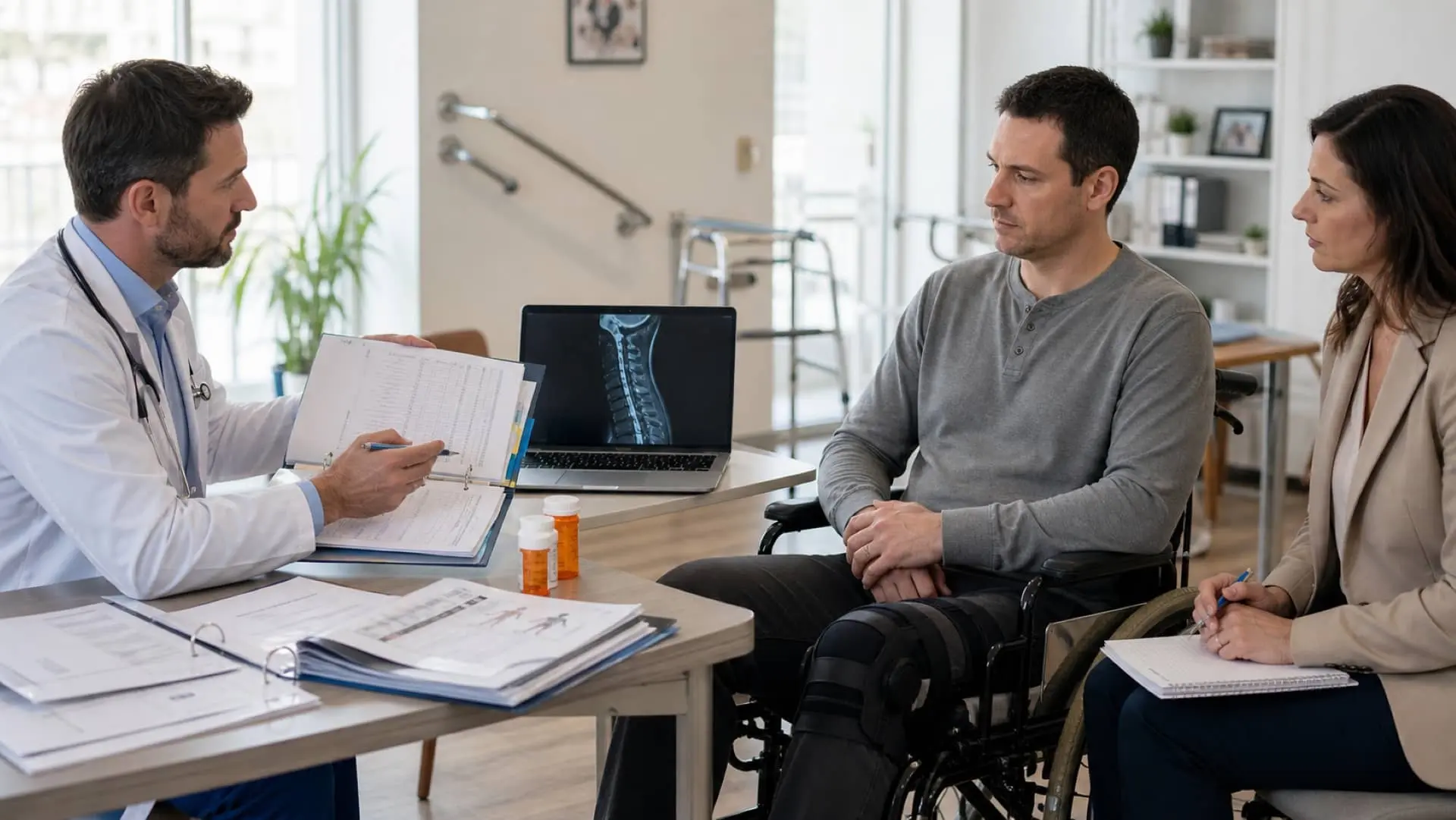
Even after early treatment ends, a patient may still require long-term care that must be clearly documented to be fully valued.
Medical Records for Future Care Claims: Building the Clinical Narrative
Medical records for future care claims do more than document treatment. They shape how long-term damages are evaluated and whether projected care is supported or speculative. When records are fragmented, even catastrophic injury medical documentation can lose clarity and impact.
From Disconnected Records to a Defensible Timeline
A stack of records alone is not enough. The file must read as a clear timeline where treatment, complaints, and limitations align. Missing links or unclear sequencing give the defense room to challenge the claim.
This is why structured medical record review is critical in complex cases. The goal is to build a clear chronology that supports future damages.
Why Record Structure Changes Case Strategy
When records are structured correctly, patterns become evidence. Ongoing symptoms, stalled recovery, and escalation of care reinforce the need for continued treatment. This is where structured medical documentation becomes leverage in high-value cases.
Proving Causation Before You Project Future Medical Needs
Before projecting future medical needs in catastrophic injury cases, causation must be supported by the record. The file has to show that the ongoing condition and related care flow directly from the event, not from prior history or unrelated decline.
Strong documentation depends on consistent treatment, clear timelines, and physician notes that connect symptoms to the injury. These elements turn a diagnosis into a defensible chain of proof.
When records contain gaps, inconsistent complaints, or weak follow-up, the defense does not need to disprove the injury. It only needs to undermine the connection between the event and the projected care.
When the File Is Ready for Future Care Valuation
Hollingsworth notes that catastrophic cases are not ready for meaningful mediation until prognosis and future care needs can be assessed with confidence. Early valuation without sufficient medical development can often lead to undervaluation, especially when the treatment picture is still evolving or incomplete. At that point, the defense can discount the future-care demand before serious negotiation even begins.
For PI attorneys, readiness depends on a coherent treatment history, documented residual limitations, and stable, medically supported recommendations.
Without that foundation, projected future care needs can appear premature, giving the defense room to challenge long-term projections even when those needs are legitimate.
From Medical Records to a Defensible Life Care Plan
Once causation and treatment progression are established, the record must support forward-looking medical projections. At this stage, the goal is not just to collect records, but to organize them into a clear foundation for future-care valuation.
This is where medical record review for PI attorneys becomes especially important. A structured review helps identify the documented injuries, ongoing limitations, treatment patterns, physician recommendations, and gaps that may affect future-care planning.
A defensible life care plan depends on more than a high projected number. It should connect the client’s injury, treatment history, functional limitations, and future medical needs in a way that is medically supported and easy to follow. When the record is organized clearly, the life care plan can translate medical evidence into categories of care, frequency, duration, and projected cost.
How Life Care Planning Translates Medicine Into Damages
Life care planning turns long-term medical needs into a damages framework. It connects documented conditions to future treatment, rehabilitation, assistive devices, home modifications, medication needs, specialist care, and support services.
Clear documentation makes those projections measurable rather than speculative. The stronger the record, the easier it becomes to explain why future care is medically probable, how often it may be needed, and why the projected costs are tied to the injury.
Why Weak Documentation Leads to Weak Projections
Even a qualified life care planner cannot fully repair a weak medical file. Vague recommendations, missing follow-ups, inconsistent timelines, or unclear physician support give the defense room to challenge future damages.
When the underlying records are incomplete, the defense can attack the projection as excessive, premature, or disconnected from the injury. That is often where case value is reduced before the life care plan is ever presented.
How Insurance Companies Challenge Future Care Claims
By the time a case reaches serious negotiation, insurers rarely dispute the injury itself. They focus on whether the future care projection is medically justified.
They typically challenge three areas:
- Medical necessity: arguing that certain services are optional or based on possibility rather than medical probability.
- Duration: claiming the client improved more than reflected, shortening long-term care needs.
- Cost structure: challenging frequency, replacement cycles, or pricing assumptions to reduce exposure.
This is where these long-term medical projections must be anchored to clear records, physician support, and a defensible methodology. A high future-care number without physician support, clear records, and a defensible method gives insurers an easy reason to reduce the demand.
Structuring Catastrophic Injury Medical Documentation for Maximum Value
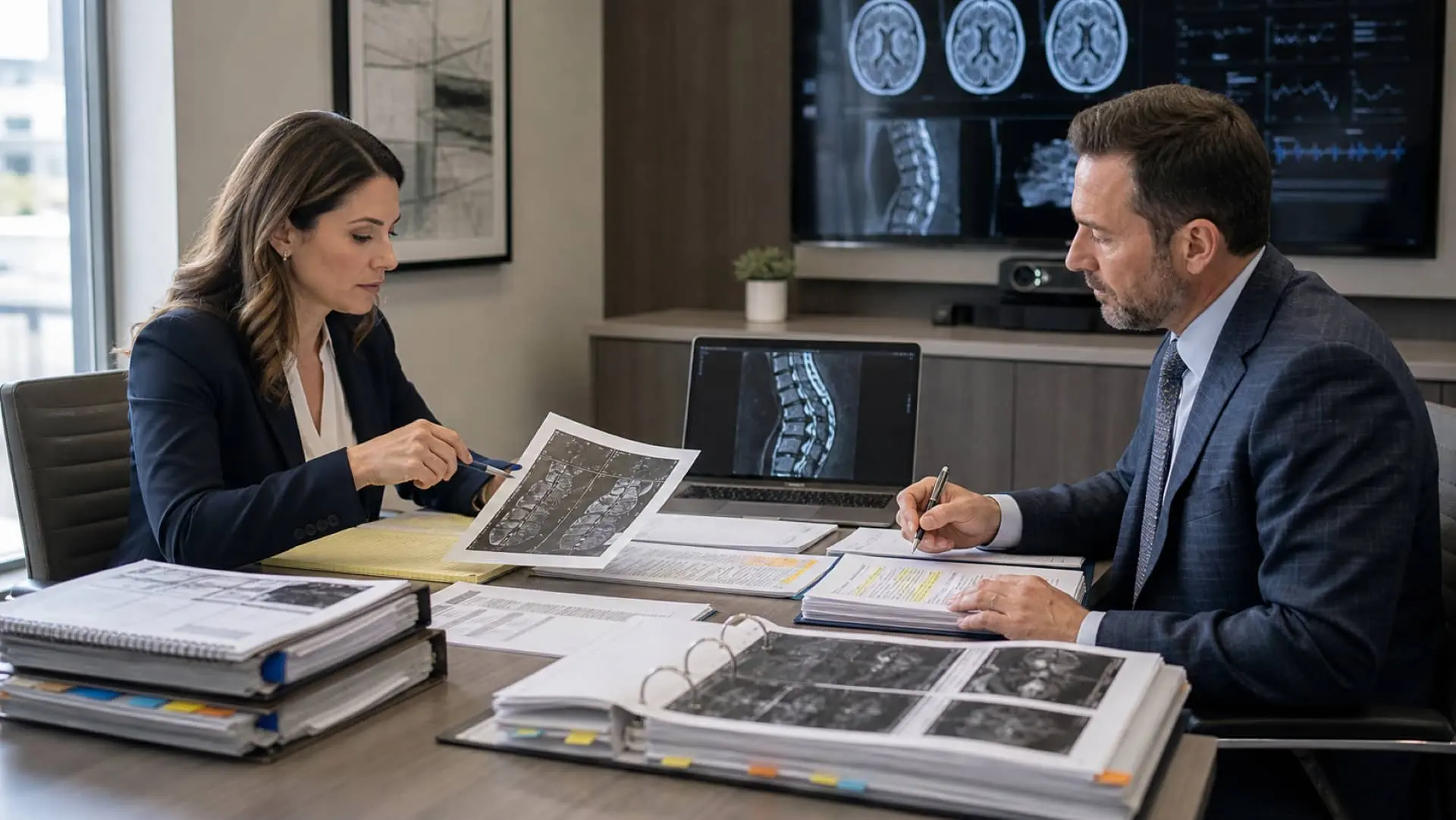
By the time a case reaches mediation or trial, presentation matters as much as proof. This type of medical documentation must be clear, not just complete. The chronology, key imaging, and documented restrictions should work together to show how the injury developed and what remains unresolved.
Organizing Evidence for Mediation and Trial
A strong mediation packet does not overwhelm the defense with records. It distills them. The best files connect mechanism of injury, treatment progression, unresolved limitations, and future needs in a sequence that feels inevitable rather than assembled.
Aligning Medical Records With Expert Opinions
Support for future care in catastrophic injury cases becomes most relevant as the case progresses. Organized records and consistent treatment history give experts a cleaner basis for connecting medical findings to long-term damages.
When catastrophic injury medical documentation aligns with expert opinion, the defense has far less room to separate medical facts from case value.
How Smart Firms Strengthen Future Care Cases Early
The strongest catastrophic files are built while the case is still developing. Smart firms identify documentation gaps early, maintain visibility into treatment progression, and ensure experts receive organized material that supports a consistent narrative.
This matters because medical documentation becomes harder to repair later in the case. For firms that need ongoing visibility, https://socialsurgemarketing.us/services/treatment-oversight/ provides a practical way to track care, monitor updates, and keep documentation aligned as treatment evolves.
If early indicators suggest that future care will drive value, the right move is to strengthen the record early and ensure the file is ready for long-term valuation.
Conclusion
In catastrophic injury cases, future care should be built into the file early, not treated as an afterthought.
When the medical records clearly connect the injury, treatment progression, lasting limitations, and future-care needs, the demand becomes easier to defend. Strong documentation helps future care appear medically necessary, connected to the event, and economically grounded.
For PI attorneys, the goal is not just to claim future damages. The goal is to show why those damages are probable, supported, and tied to the record.
Firms that establish this structure early enter negotiation with stronger leverage and fewer gaps for the defense to attack.