

Letters of protection in Texas PI cases can shape how treatment is documented, how medical bills are protected, and how damages are presented during demand, mediation, negotiation, or litigation. A case may include thorough treatment, clear imaging, and a cooperative client, yet still face serious questions if the LOP arrangements or lien documentation are not clearly reflected in the record.
LOP-based treatment is often a necessity. Many clients with letters of protection in Texas PI cases do not have health insurance for the care they need, and providers willing to work on a lien basis make treatment possible while the case is active.
For Texas PI law firms, the question is rarely whether to use LOPs or medical liens. The question is whether the records can support how the treatment happened, what it cost, and why it was necessary, when the file moves toward demand, mediation, negotiation, or litigation.
Why Letters of Protection in Texas PI Cases Are Common
A Letter of Protection tells a medical provider that the client cannot pay now, but the attorney will protect the bill from the eventual settlement. Letters of protection in Texas PI cases are common when uninsured or underinsured clients need specialist care, advanced imaging, injections, or surgery while the case is still being built. When medical record review services catch the structure of an LOP early, the attorney can confirm that the file shows when the LOP was signed, who agreed to it, and how the treatment that followed connects to causation and the underlying injury.
Medical Liens vs. LOPs in Texas Personal Injury Claims
Medical liens and letters of protection are related but not identical. A medical lien is a formal claim by a provider against a future settlement, often recorded against the case. A letter of protection is a written agreement, typically between the attorney and the provider, to pay the bill from settlement funds in exchange for treating the client now.
A single PI case may involve both: a lien filed by a hospital for emergency care, and an LOP signed with a follow-up specialist. The file should show which provider relied on which arrangement, when each was created, and how the treatment connects to the injury. When that distinction is unclear, the attorney often has to reconstruct it later, under pressure.
Texas Hospital Liens Under Texas Property Code Chapter 55
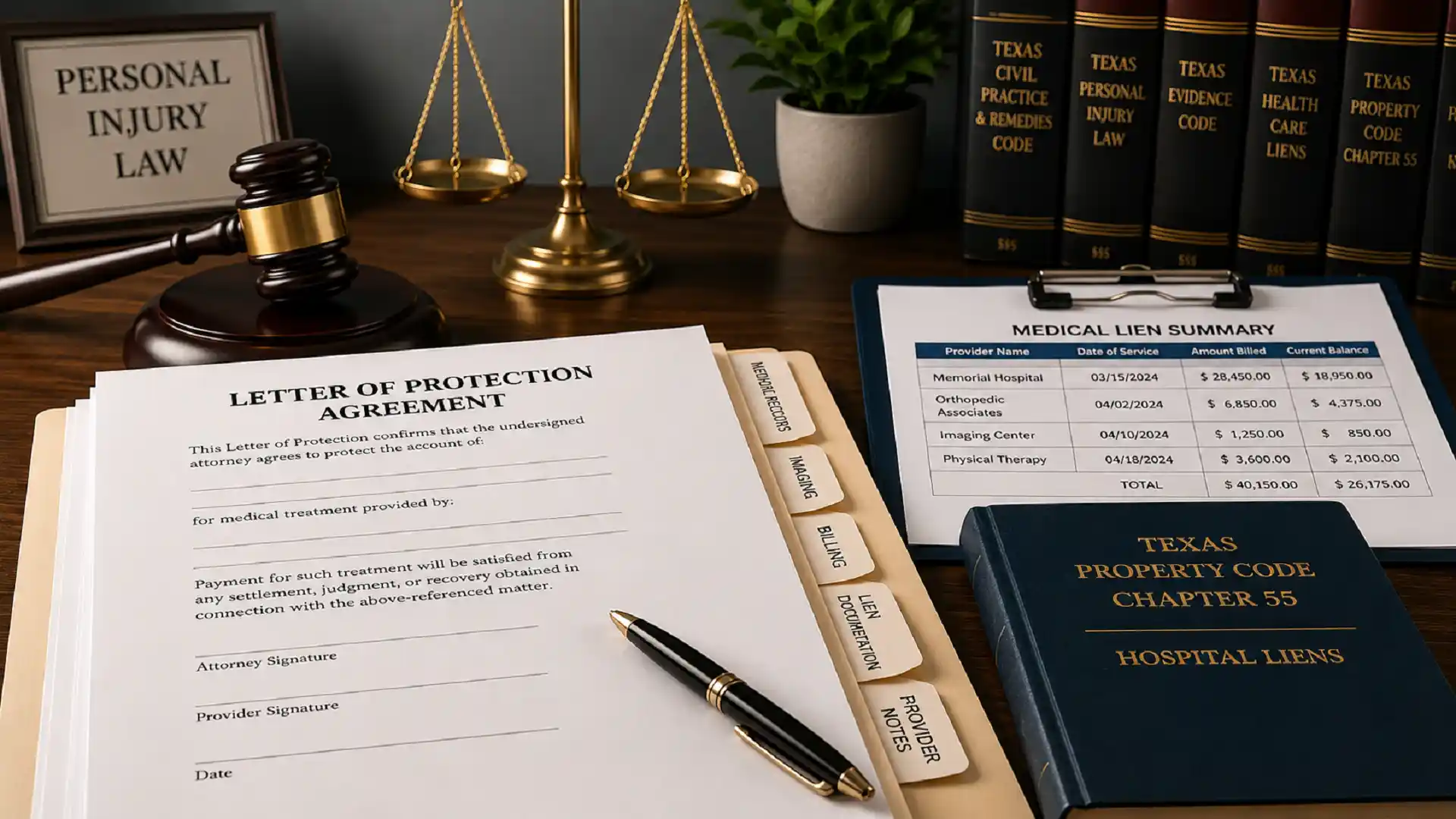
Hospital liens in Texas operate under a specific statutory framework. Under Texas Property Code Chapter 55, a hospital may have a lien on a personal injury claim when the injured person is admitted to a hospital not later than 72 hours after the accident, assuming the injury was caused by an accident attributed to another person’s negligence.
A Texas hospital lien filed under Chapter 55 follows particular procedural rules and may interact differently with settlement distribution than a contractual LOP. PI attorneys should identify which type covers each provider, because the lien negotiation Texas settlement work depends on that distinction.
What a Strong LOP File Should Show
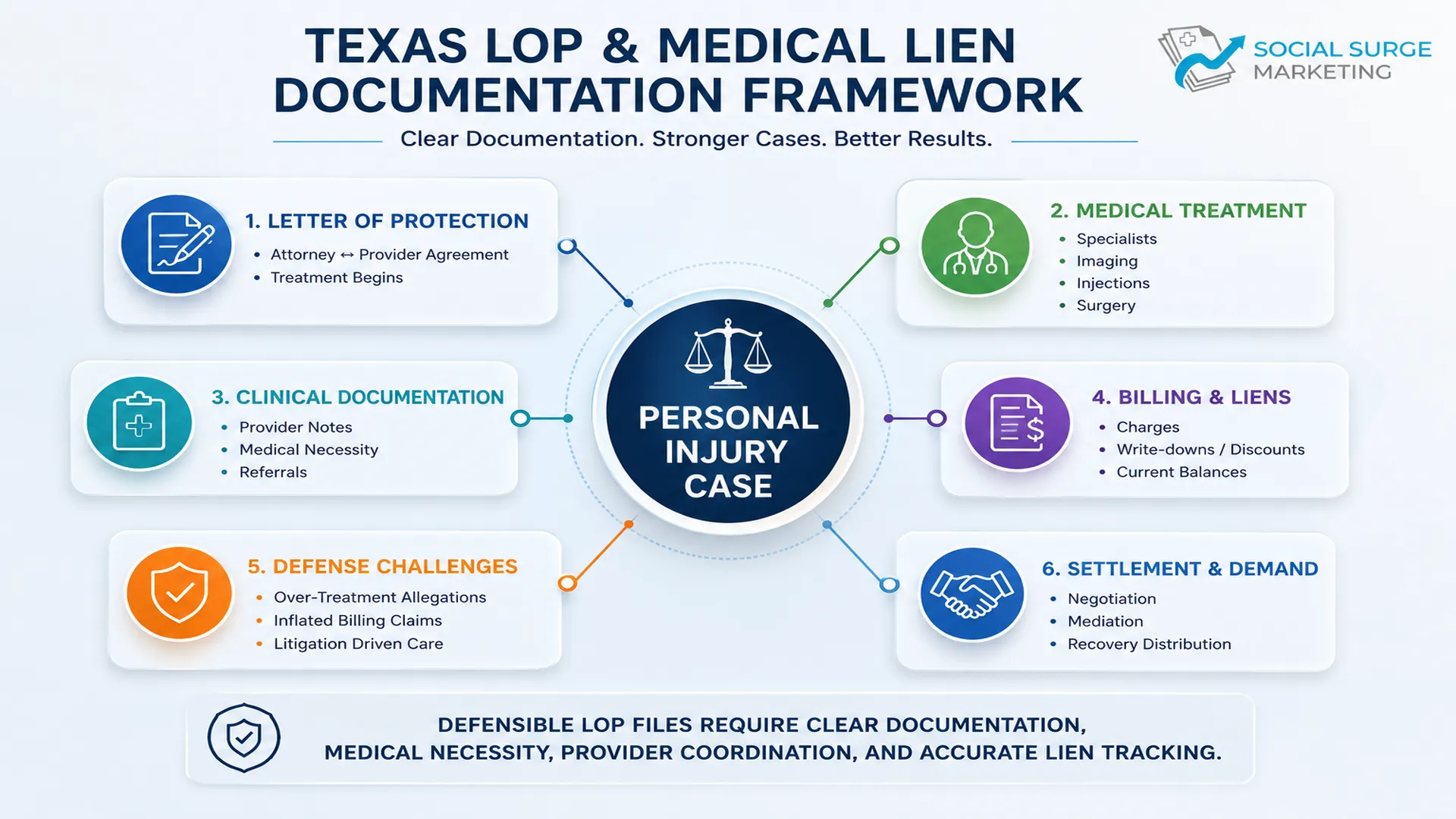
A strong file contains more than the LOP or lien paperwork. It contains the supporting context that makes the arrangement defensible. LOP and lien-based treatment files generally hold up better when the record shows:
- The date the LOP or lien was created, and which provider it applies to.
- The treatment that followed, with provider notes connecting the care to the underlying injury.
- The reason the client could not access traditional health insurance for that care.
- The clinical justification for each procedure, referral, or imaging study under the LOP.
- Communication between providers when more than one specialist is involved.
- Final billing that matches the treatment, with any discounts or write-downs clearly noted.
These details give the attorney a way to explain why each piece of treatment was reasonable, necessary, and tied to the incident without leaving causation, medical necessity, or damages open to challenge.
How Defense Teams Question LOP-Based Treatment
The defense rarely accepts LOP treatment at face value. The arrangement gives them several reliable lines of argument, most aimed at suggesting the treatment was driven by litigation rather than medical necessity.
In practice, a LOP in Texas personal injury claims can become a defense target when the medical record does not clearly explain why each referral, imaging study, or procedure was medically necessary.
Common Defense Arguments Against LOP-Based Care
- The provider only ordered procedures because the attorney was paying through the LOP.
- The billed amounts are inflated above what an insurance carrier would have approved.
- The client received more treatment than a comparable patient would under standard insurance.
- The chronology shows imaging or procedures not clinically indicated by the contemporaneous notes.
- The provider’s relationship with the law firm suggests a pattern that should be disclosed.
Showing Medical Necessity Independent of Payment
The strongest counter is documentation that explains the medical necessity of each step independent of who was paying. When provider notes show clear clinical reasoning, failed conservative care, exam findings tied to treatment decisions, and referrals justified by the underlying injury, defense arguments about litigation-driven treatment lose their footing.
The record should let any reviewer see why each procedure made sense based on the medicine, not the funding arrangement. That clarity protects the file when LOP arrangements come under scrutiny during demand, mediation, or trial preparation.
When Provider Coordination Creates Problems in LOP Treatment Records
LOP files often involve more providers than insurance-based files, because the client may move between practices, imaging centers, surgical groups, and rehab facilities. Without clear coordination, the PI case file can become a patchwork the defense questions piece by piece.
This is why treatment oversight matters more in LOP cases. Active oversight can flag missing records, unfollowed referrals, or documentation missing for procedures already billed. In catastrophic injury claims, this coordination is the difference between a coherent treatment story and a stack of separate bills. Similar issues appear in orthopedic injury claims involving surgical records, where LOP-funded surgery generates documentation across providers.
Pre-Existing Conditions and the Defense’s Counter-Narrative
A pre-existing condition complicates almost every PI case. When that condition is treated under an LOP, the defense will often suggest the LOP treatment was for the old condition, not the new injury and that the case is worth less than the demand reflects.
A well-supported medical record works against that argument. The record should make clear what changed after the incident, and what is genuinely new versus an aggravation. What does not work is silence. A record that simply shows “patient treated for back pain” under an LOP, with no comparison to pre-incident history, gives the defense room to write its own story.
How Letters of Protection in Texas PI Cases Affect Demand and Settlement
Tracking actual amounts owed under medical liens and LOPs is its own challenge. Provider balances change through write-downs, negotiated reductions, and billing adjustments. A demand that does not match the current state of the liens can create friction during negotiations.
For demand preparation, the file should show original billed amounts, adjustments in progress, and the current balance owed to each provider. Lien negotiation Texas settlement work depends on accurate, current numbers. A clear chronology like the one in a structured medical chronology for personal injury cases that aligns treatment dates with billing and lien status gives the attorney one document to reference rather than five.
Reviewing LOP and Lien Documentation Before Demand
LOP and lien issues most commonly become visible too late: during mediation, in a defense response to demand, or when settlement distribution takes longer than expected. By then, missing records are often difficult to reconstruct.
Before demand, it helps to confirm:
- Every LOP and lien is documented, with dates and signatures intact.
- Treatment under each LOP is clinically supported in provider notes.
- Billing matches the treatment, with adjustments explained.
- Pre-existing conditions are separated from new injury treatment.
- Provider communication is captured where multiple specialists are involved.
- Record gaps that could be filled with provider follow-up are flagged early.
This review changes what the attorney can show, clearly and confidently, when demand or mediation begins.
Final Thoughts: A Strong LOP Record Protects More Than the Provider
A Letter of Protection protects the provider’s right to be paid. The record surrounding it protects something else: the attorney’s ability to defend case value against routine defense arguments.
LOP and lien treatment files rarely fail because the treatment was wrong or the LOP was improperly written. They fail because the supporting record clinical necessity, provider coordination, billing alignment, and pre-existing condition comparison was never assembled into a defensible whole.
Need a clearer view of letters of protection in Texas PI cases before demand or mediation? Social Surge Marketing helps Texas PI law firms organize medical records, track LOP and lien-based treatment, identify documentation gaps, and clarify timeline issues before they affect settlement value.
Frequently Asked Questions About LOPs and Medical Liens in Texas
These are informational answers to common questions, not legal advice for any specific case.
What is the difference between a hospital lien and a letter of protection in Texas?
A Texas hospital lien is a statutory claim under Texas Property Code Chapter 55. For a hospital lien to attach, the injured person generally must be admitted to a hospital not later than 72 hours after the accident. A letter of protection is a contractual agreement, usually between an attorney and a provider, to pay the bill from settlement funds.
Can a medical lien reduce my settlement to zero in Texas?
In some Texas PI cases, combined liens, Chapter 55 hospital liens, and LOP balances can approach or exceed available settlement funds, particularly with low policy limits. Lien negotiation is routine in Texas PI settlement work, and distribution depends on negotiation and applicable lien priority rules.
How do I negotiate a medical lien in Texas?
Negotiation typically involves the attorney contacting each lienholder with case-specific factors settlement size, treatment necessity, and connection to the injury and requesting a reduction. Documentation supporting medical necessity strengthens the position. Chapter 55 hospital liens follow statutory rules affecting reductions.
How long does a medical lien last in Texas?
Texas hospital liens under Chapter 55 have specific filing deadlines and statutory durations. LOPs and contractual liens are governed by the agreement terms and Texas contract law.