

Orthopedic injury claims often look strong because the injury appears serious, well-documented, or significant enough to require surgery. But in personal injury litigation, a fracture, torn ligament, joint injury, or surgical recommendation does not carry the claim by itself.
The medical record must show more than treatment. It should explain what changed after the incident, why each step in care made sense, and how imaging, orthopedic evaluations, operative reports, therapy notes, and follow-up records support the same injury story.
For Texas PI attorneys and case managers, the question is not only whether the client was injured. The question is whether the orthopedic record tells a clear, defensible story before the defense builds one from the gaps.
Why Orthopedic Injury Claims Depend on Strong Medical Documentation
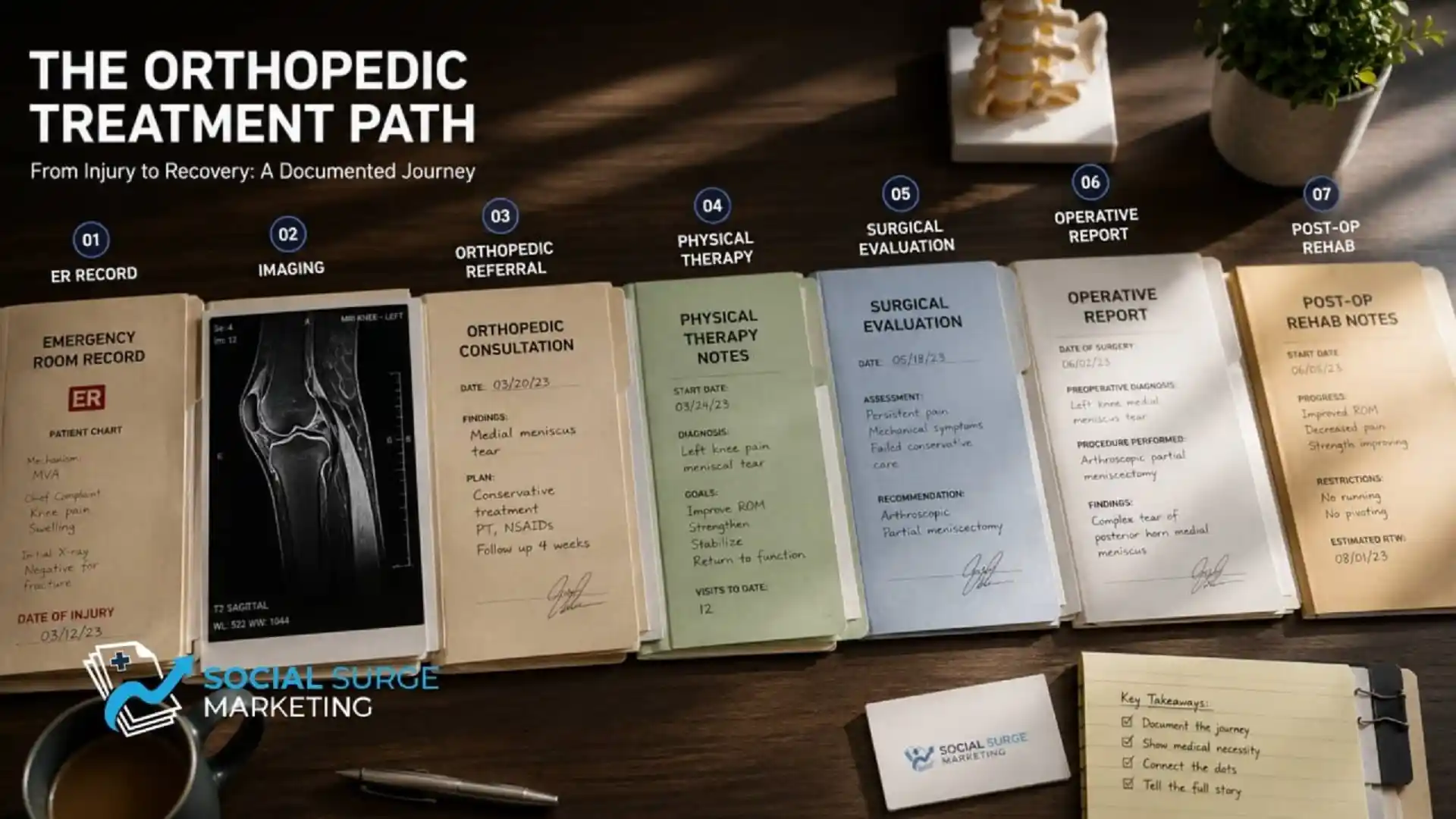
Orthopedic files are often document-heavy. A single claim may include emergency records, imaging reports, orthopedic consults, injection notes, operative reports, therapy updates, work restrictions, billing records, and follow-up evaluations.
That volume helps only when the file is easy to follow. A large file that is out of order, missing key reports, or thin on clinical reasoning can make orthopedic injury claims harder to evaluate. Early medical record review services can help Texas PI firms identify missing records, unclear referrals, and timeline issues before those weaknesses become defense arguments.
Common Documentation Gaps in Orthopedic Injury Claims
Common documentation gaps often include:
- Imaging reports that are not connected to symptoms or exam findings.
- Delayed orthopedic referrals without documented reasoning.
- Therapy notes that repeat limitations without showing progress or setback.
- Surgical recommendations without clear failed conservative care.
- Prior orthopedic history that is not compared with post-incident changes.
- Functional limitations that appear late or inconsistently in the file.
Orthopedic care often turns on diagnosis, treatment, recovery, and function. In a PI file, those same points have to be visible in the documentation, not left for the attorney to reconstruct later.
What Orthopedic Medical Evidence in PI Cases Should Prove
Orthopedic medical evidence in PI cases should do more than confirm a diagnosis. It should show how the treatment path moved from the first complaint to later limitations.
A torn meniscus, rotator cuff tear, fracture, disc injury, or joint instability may sound significant. In orthopedic injury claims, the record still has to show how that diagnosis affected treatment, function, or claim value.
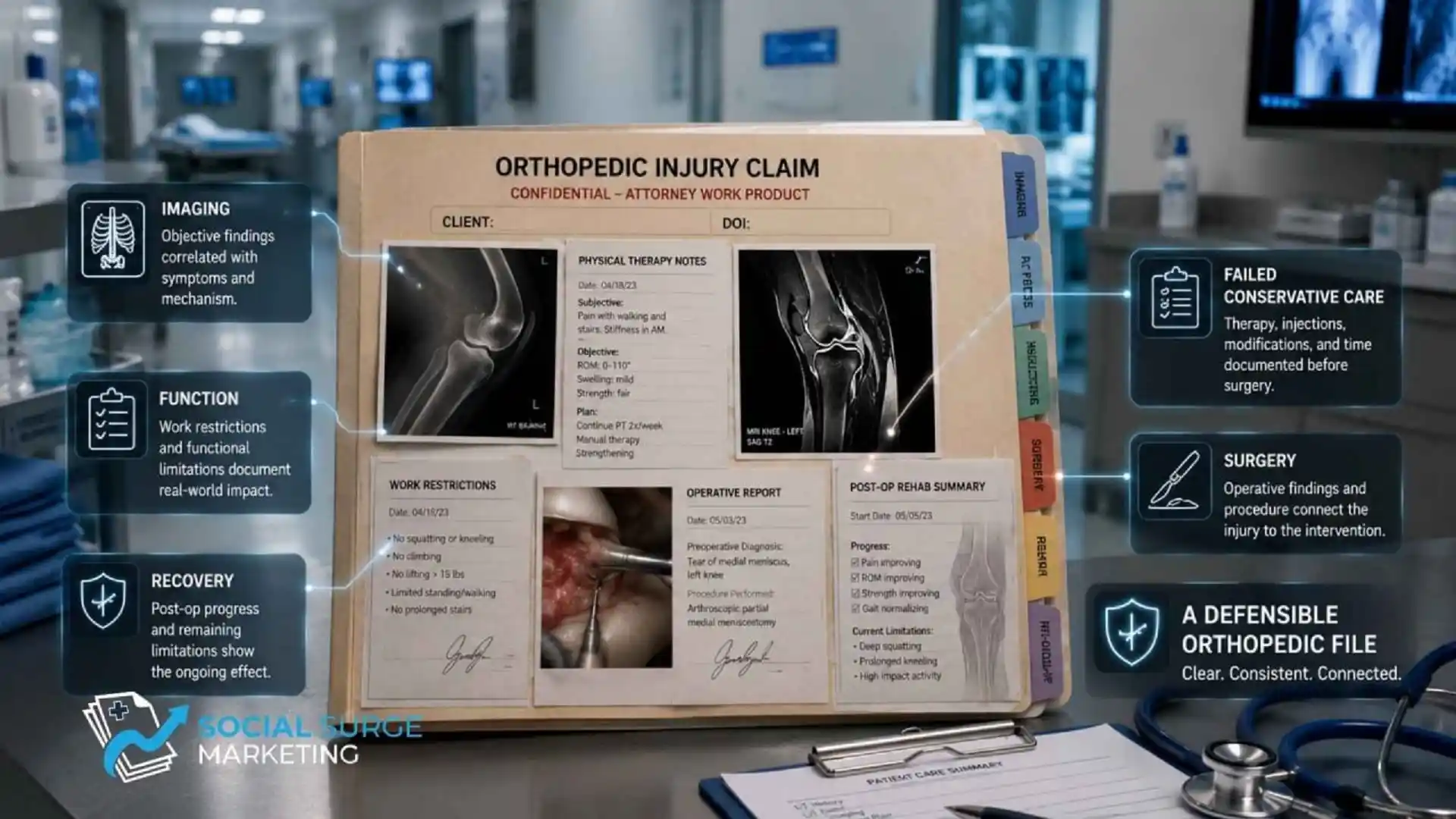
Strong orthopedic medical evidence should connect:
- the incident mechanism,
- early complaints,
- orthopedic exam findings,
- imaging results,
- treatment escalation,
- failed conservative care,
- functional limitations,
- surgical findings,
- and post-surgical recovery.
Documenting Orthopedic Injuries Beyond the Diagnosis
Documenting orthopedic injuries requires more than listing the body part and diagnosis code. The record should show pain location, range of motion changes, weakness, instability, swelling, weight-bearing limits, work restrictions, and activity loss when those details are relevant.
Those details give attorneys something concrete to explain beyond the diagnosis. A diagnosis names the condition, but function shows how the condition changed the client’s life.
Why Imaging Alone Is Not Enough
Imaging can be powerful, but it rarely answers the whole claim by itself. A report may show a tear, fracture, bulge, degeneration, hardware placement, or post-surgical change without explaining causation or function.
When imaging language is mild, degenerative, or unclear on acuity, the rest of the file has to provide context. Orthopedic medical evidence in PI cases becomes stronger when imaging is tied to complaints, exam findings, treatment response, and limitations.
Surgery-Related Records in Injury Claims: What Attorneys Should Review
Surgery-related records in injury claims can strengthen the file when they make the surgical path easy to follow: why the procedure was recommended, what was found, and how the client recovered afterward.
Key surgical records attorneys should review include:
- Pre-surgical orthopedic evaluations and referral notes.
- Imaging reports that supported the surgical recommendation.
- Failed conservative care, including therapy, bracing, medication, or injections.
- Operative reports, anesthesia records, and procedure details.
- Post-operative visits, restrictions, complications, and therapy records.
- Follow-up notes showing recovery, limitations, or unresolved symptoms.
Together, these records help show whether the surgery followed a reasonable treatment path and whether the post-operative course supports the claimed limitations.
Operative Reports Should Explain More Than the Procedure
An operative report can confirm what was done, but the procedure name rarely tells attorneys enough. The report may describe intraoperative findings, tissue damage, repair work, hardware placement, or unexpected pathology.
Those details matter because the defense may compare surgical findings against imaging language, prior complaints, and the claimed mechanism of injury. A strong record makes it harder for the defense to pull the operative findings away from the rest of the treatment path.
Post-Surgical Notes Need to Show Recovery and Remaining Limits
Post-surgical records should not disappear after the operation. Follow-up visits, therapy notes, restrictions, pain reports, wound status, mobility changes, and return-to-work limits help explain recovery.
If those records are missing or vague, the defense may argue that surgery resolved the issue or that later complaints are unrelated. Surgery-related records in injury claims are strongest when they show both improvement and remaining limitations.
Building the Orthopedic Treatment Chronology Before the Defense Does
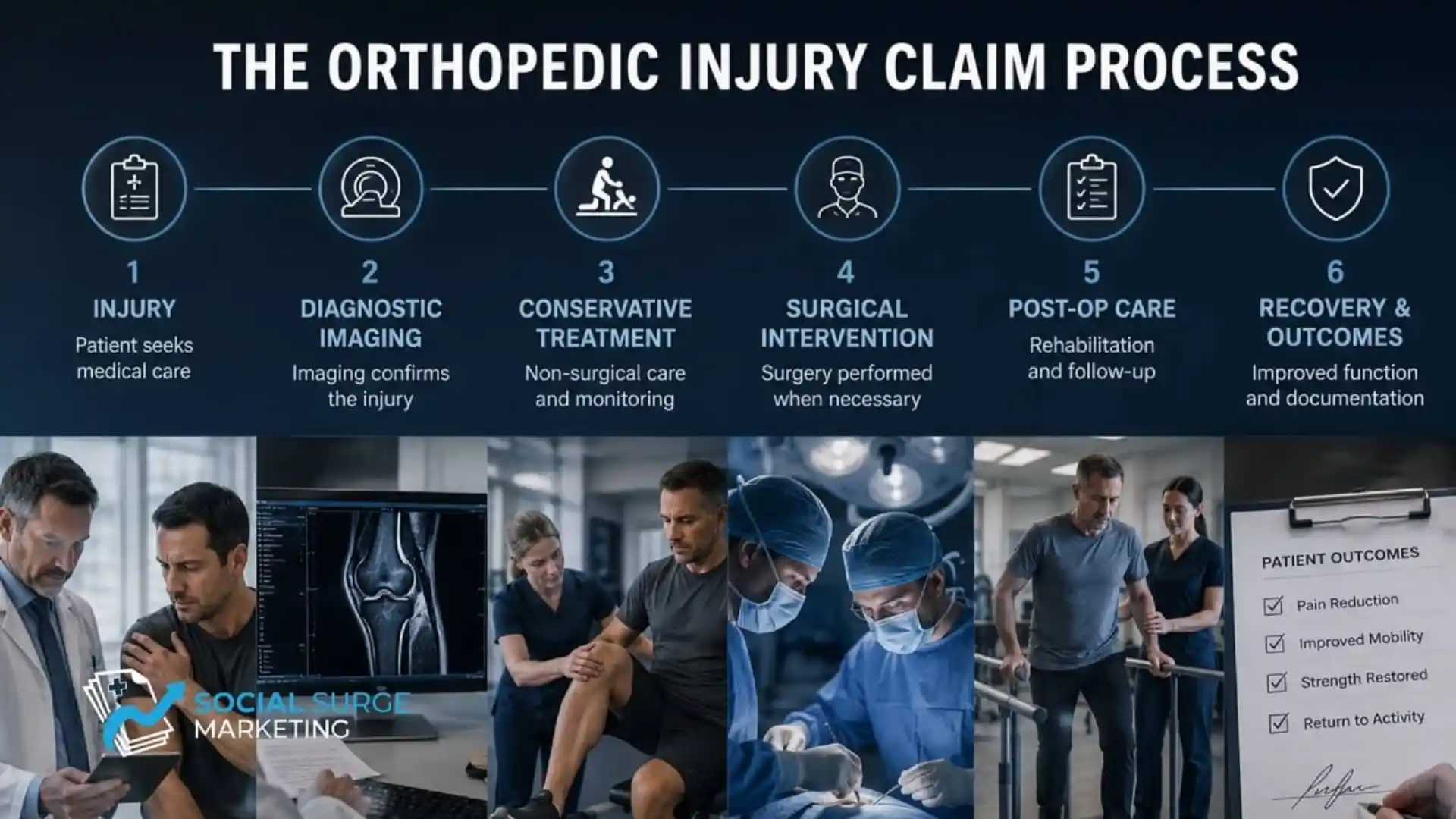
A strong chronology should show the movement of care: initial complaints, imaging, referral, conservative treatment, failed improvement, surgical evaluation, procedure, rehabilitation, and ongoing limitation.
This is where treatment oversight can help while the case is still active. Tracking delayed referrals, therapy gaps, missing records, and post-operative notes can show where the defense may press before demand preparation.
Orthopedic injury claims can lose value when important developments appear suddenly in the record. If the first clear surgical recommendation appears late, or if therapy gaps are unexplained, the defense may frame the treatment path as disconnected from the incident.
Prior Orthopedic History Should Be Compared, Not Avoided
Prior injuries, arthritis, degeneration, earlier surgeries, and chronic joint complaints can become major issues. The defense may argue that the current condition existed before the incident or would have progressed anyway.
Prior history should not be avoided; it should be compared. The record should clarify what changed. Prior knee soreness is different from a post-crash meniscus tear with new swelling, new instability, modified work activity, and referral for surgical evaluation.
In orthopedic injury claims, that comparison can be central to causation. A clear before-and-after record helps separate baseline problems from aggravation, new injury, or accelerated treatment needs.
Medical Necessity and Surgical Reasoning Must Be Visible
Medical necessity becomes especially important when treatment escalates from conservative care to surgery. In a PI file, the practical question is why the provider moved from therapy to imaging, from imaging to specialist care, or from specialist care to surgery.
Orthopedic medical evidence in PI cases works better when the notes show the reasoning behind each escalation. The file should not ask the attorney to guess why the surgeon recommended an operation.
Failed Conservative Care Should Be Clear in the Record
Failed conservative care should be visible, not assumed. If therapy did not restore function, medication gave only partial relief, bracing did not stabilize the injury, or injections failed to resolve symptoms, the notes should explain why the next step made clinical sense.
That documentation supports medical necessity without making the claim sound overstated. It shows that treatment escalation followed a reasoned path.
How Defense Teams Challenge Orthopedic Records
Defense teams often look for places where the file does not quite connect. They may not need to deny the injury completely; they only need to argue that the record leaves too much room between the incident, the treatment path, and the claimed limitations.
Common defense pressure points include:
- Degenerative findings or prior orthopedic complaints.
- Delayed imaging, delayed referral, or delayed surgery.
- Gaps in therapy or post-operative follow-up.
- Operative findings that are not clearly tied to the incident.
- Restrictions or functional limitations that appear inconsistently.
- Surgical recommendations without documented failed conservative care.
For this reason, orthopedic medical evidence in PI cases should be organized before the defense defines the weak points. Once the file is framed as inconsistent or underexplained, the attorney may spend more time defending records than presenting the injury.
Preparing Stronger Orthopedic Files Before Demand or Mediation
Documenting orthopedic injuries well means reviewing the file before demand, mediation, or expert pressure. The review should ask whether someone outside the treating relationship can follow the medical story without guessing.
The review should also identify what is missing: unsigned operative notes, absent therapy records, unclear restrictions, missing imaging, or gaps after surgery.
This is especially important in spine injury claims, where imaging findings, symptoms, function, and treatment progression may not line up neatly. Orthopedic and spine-related files often need careful chronology support so the medical evidence does not depend on one report alone.
Early review gives attorneys more time to request missing records, clarify provider transitions, and clean up weak chronology points before the defense uses them.
FAQ
What records are important in orthopedic injury claims?
Important records may include emergency records, imaging reports, orthopedic evaluations, therapy notes, injection records, operative reports, post-surgical follow-up notes, work restrictions, and billing records.
Why is imaging not enough in orthopedic injury claims?
Imaging can show a tear, fracture, degeneration, or surgical change, but it may not explain causation, medical necessity, functional loss, or how the injury affected the client after the incident.
What are surgery-related records in injury claims?
Surgery-related records may include pre-surgical evaluations, imaging, failed conservative care notes, operative reports, anesthesia records, post-operative follow-ups, restrictions, therapy records, and recovery documentation.
Why does prior orthopedic history matter in PI cases?
Prior orthopedic history matters because the defense may argue that the client’s condition existed before the incident. A strong record should compare baseline symptoms with post-incident changes.
Final Thoughts: Strong Records Hold the Claim Together
Orthopedic injury claims are not strengthened by diagnosis or surgery alone. They depend on records that make the treatment path, surgical reasoning, and remaining limitations hard to separate from the incident.
Strong orthopedic files help Texas PI firms explain why treatment was necessary, why surgery was supported, what changed after the incident, and how the injury affected the client’s life. Strong orthopedic medical evidence in PI cases also makes surgery-related records easier to follow, from failed conservative care to operative findings and post-surgical recovery.
Social Surge Marketing helps Texas PI law firms review orthopedic records, identify documentation gaps, track treatment issues, and build clearer medical chronologies before demand, mediation, or litigation.
If your firm is handling orthopedic injury claims involving surgery, delayed referrals, prior orthopedic history, or unclear treatment progression, Social Surge can help organize the medical record before the defense defines the weak points.