
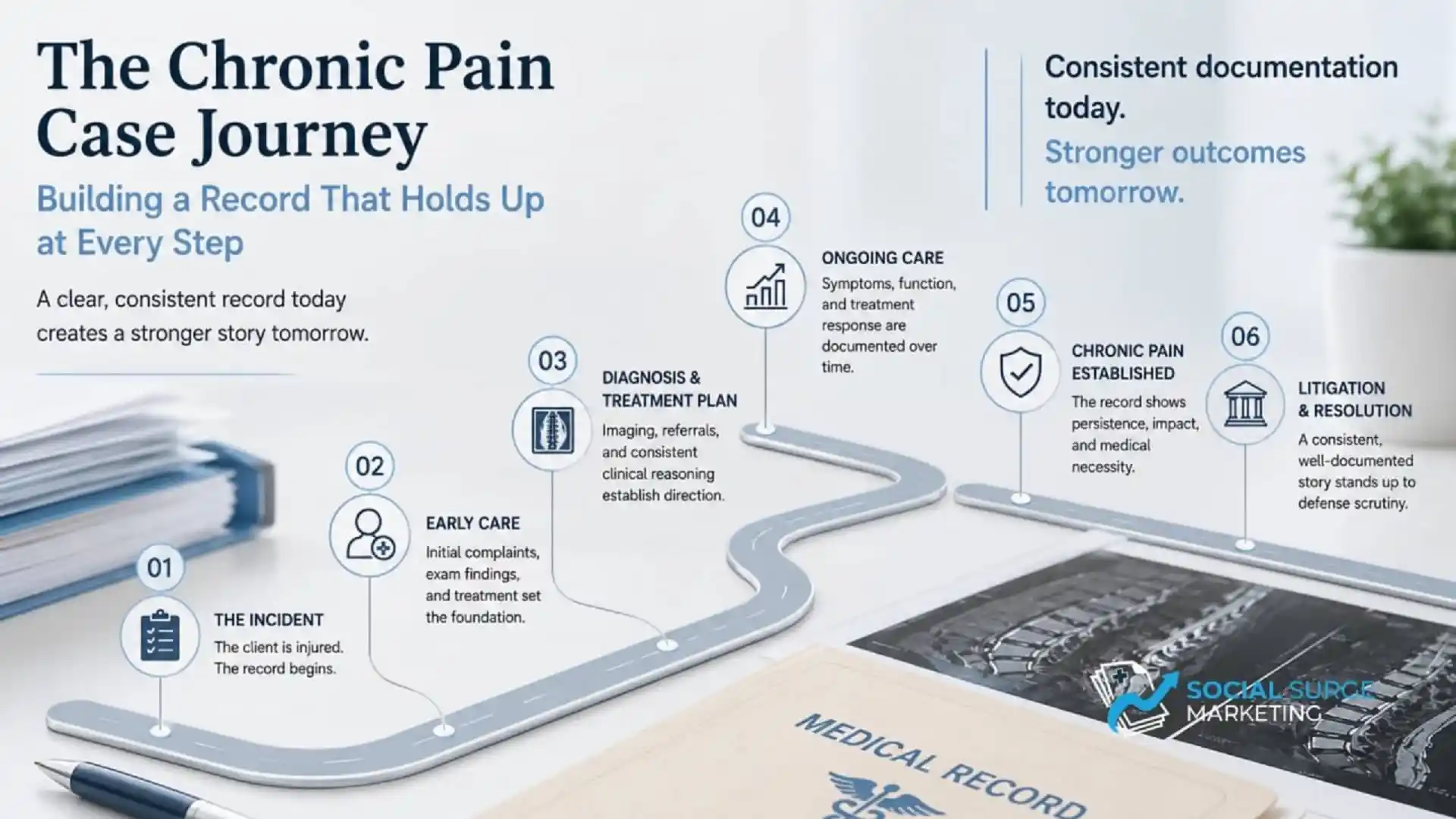
Chronic pain claims in personal injury cases often fail to gain full value not because the pain is unreal, but because the medical record does not hold together. When records fail to connect symptoms to function, treatment decisions, provider observations, and post-incident changes, carriers and defense teams have more room to challenge causation, medical necessity, and damages.
For Texas PI attorneys and case managers, the goal is not just to collect records. The goal is to build a consistent medical chronology that shows what changed after the incident, how symptoms progressed, why care continued, and how the client’s daily function was affected.
Strong chronic pain files do more than repeat pain complaints. They organize medical evidence into a clear, defensible story that can be reviewed, explained, and used before demand, mediation, or litigation.
Why Chronic Pain Claims Become Difficult to Prove
Chronic pain does not always fit neatly into a single test result. Imaging may be mild, exam findings may vary, and symptoms may become more complicated as treatment continues. A client may still have ongoing pain even when the medical record does not contain one dramatic finding that explains everything.

That is why proving chronic pain in injury cases depends heavily on consistency across the record. The issue is not whether every note sounds identical. The issue is whether the file tells a clear, believable treatment story from the first complaint through later care.
When that story is hard to follow, the defense may focus on what the file does not explain. They may question why symptoms lasted so long, why care continued, why treatment escalated, why there was a gap in care, or whether the current complaints are actually different from the client’s prior baseline.
Early record review can help identify these weak points before they become harder to address during demand preparation, mediation, or litigation.
What Consistent Medical Records Should Show
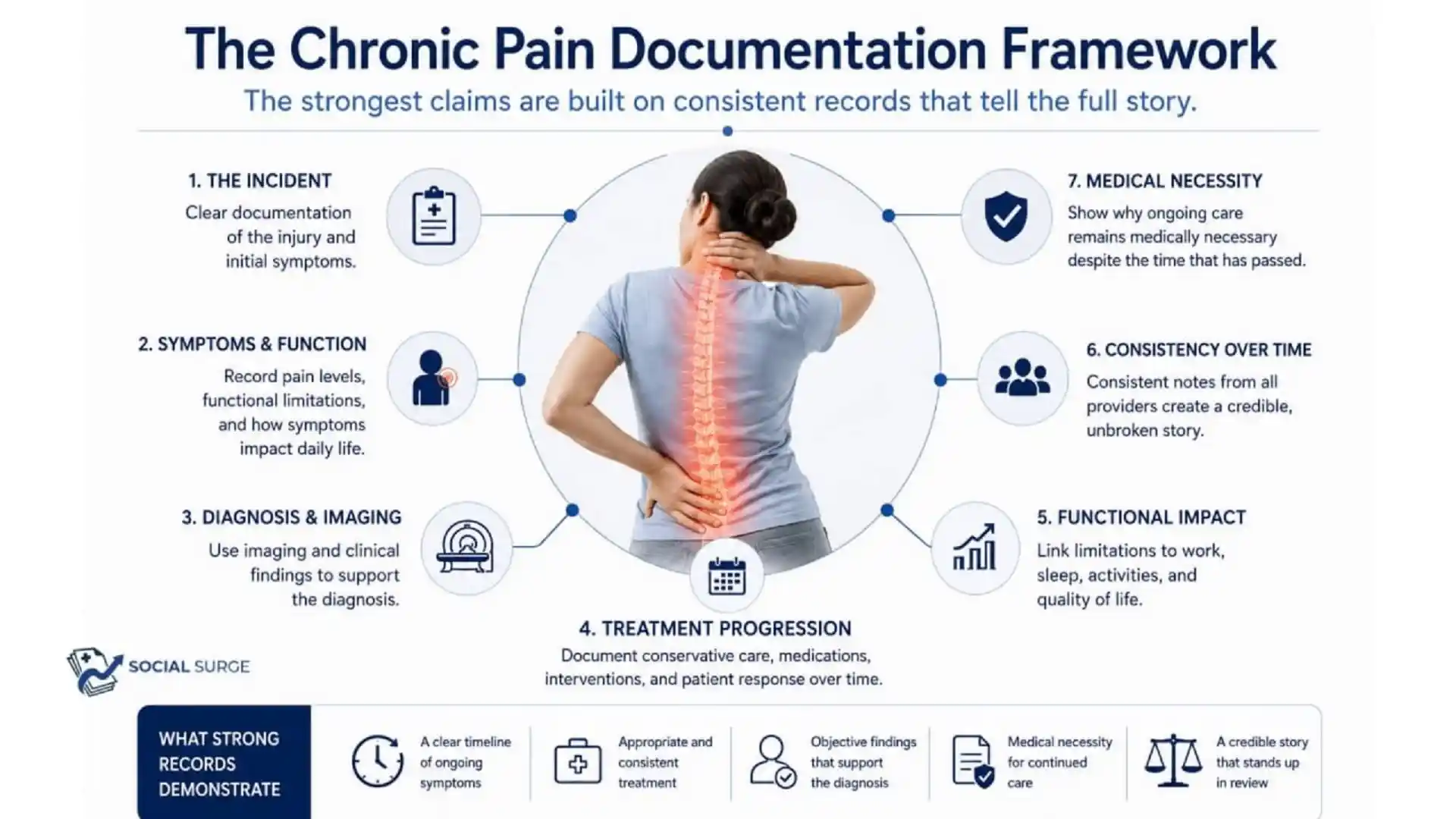
Consistent medical records should connect the client’s symptoms to function, treatment decisions, provider observations, and the timeline after the incident. A record that only says “pain continues” leaves too many unanswered questions for the attorney later.
A stronger file shows whether the client could sit, sleep, work, drive, lift, walk, tolerate activity, or complete daily tasks. It also shows whether conservative care helped, failed, or led to the next step in treatment.
- Symptom location, frequency, severity, and changes over time.
- Functional limitations involving work, sleep, lifting, driving, mobility, sitting, standing, or daily activity.
- Physical exam findings, range of motion limits, neurological signs, tenderness, or documented pain behavior.
- Treatment progression, including therapy, imaging, referrals, medications, injections, or specialist care.
- Provider reasoning explaining why care continued, changed, or escalated.
- Prior history and whether current complaints differ from baseline symptoms.
- Treatment response, including improvement, setbacks, plateaus, or failure of conservative care.
This kind of structure gives attorneys more than a stack of records. It creates medical evidence for chronic pain claims that later reviewers can understand, organize, and use.
Common Documentation Problems That Weaken Chronic Pain Claims
Many chronic pain claims become vulnerable when early notes explain the injury clearly, but later documentation loses functional detail, treatment reasoning, or context for why care continued.
A client may report persistent neck pain across several visits, but without reduced driving tolerance, sleep disruption, failed therapy response, work limitations, or a reason for referral, the file can look weaker than the injury actually is.
Repetitive Notes Without Development
Repetitive notes are a common problem in chronic pain claims. A therapy record that repeats the same pain complaint without showing progress, setbacks, activity limits, or clinical reasoning can make continued care appear unsupported.
The real problem is repetition without development. Chronic pain records should show whether the condition changed, plateaued, worsened, improved temporarily, or failed to improve despite treatment.
A note that says “low back pain continues” is less useful than one that explains reduced sitting tolerance, difficulty bending, sleep disruption, limited lifting, failed therapy response, or referral for further evaluation.
Treatment Gaps Without Context
Treatment gaps can become major defense issues. A gap may come from referral delays, scheduling issues, transportation barriers, provider availability, financial strain, insurance issues, or confusion about next steps.
If the record does not explain the gap, carriers or defense teams may argue that the client recovered, stopped needing care, or restarted treatment for unrelated reasons.
A strong chronology preserves the context before the gap becomes a defense theme. This is often critical when proving chronic pain in injury cases, especially when care extends over several months.
Escalation Without Medical Necessity
Medical necessity becomes more important as treatment continues. The longer care extends, the more likely the carrier or defense team will ask why the treatment remained necessary.
In PI record review, medical necessity becomes practical. The file should help explain why therapy continued, why imaging was ordered, why referral was needed, why medication changed, or why escalation to pain management made sense at that point in the timeline.
Failed conservative care should be visible in the record, not assumed. If therapy, medication, or activity modification did not restore function, the notes should explain why the next step was clinically reasonable.
Prior History Without Comparison
Prior pain, degenerative findings, earlier injuries, or previous treatment can become major issues in chronic pain claims in personal injury cases. The defense may argue that the current condition existed before the crash or followed a natural progression.
The answer is not to ignore prior history. The better record explains what changed after the incident.
Prior low back soreness is different from post-crash radicular pain, new work restrictions, reduced sitting tolerance, and escalation to pain management. A useful review compares baseline symptoms with post-incident complaints, treatment intensity, functional decline, new restrictions, imaging, and changes in care.
That comparison helps separate ordinary prior history from a meaningful aggravation.
Building a Medical Chronology for Chronic Pain Claims
A medical chronology for chronic pain should not simply list appointments. It should show movement. The reviewer should be able to see when symptoms started, persisted, changed the treatment path, failed conservative care, led to referral, and began showing clearer functional limits.
This matters because chronic pain claims in personal injury cases often depend on patterns. A single pain complaint is easier to challenge. A consistent pattern across providers, tied to function and treatment response, is harder to dismiss.
- What symptoms appeared first, and did they match later chronic pain patterns?
- When did the client’s function begin to decline?
- What conservative treatment was attempted first, and how did the client respond?
- When did the provider order imaging, refer the client out, or change the treatment plan?
- Were treatment gaps, provider changes, or referral delays identified and explained?
- Did prior history differ from the post-incident condition?
- Why did care continue or escalate at each major point in the file?
For firms handling active treatment, treatment oversight for active PI care can help flag chronology gaps, delayed referrals, missing documentation, and unclear treatment progression before they become defense talking points.
Why Functional Limitations Matter More Than Pain Scores Alone
Pain scores can help, but they do not carry a chronic pain claim by themselves. A number without context does not show how the pain affected the client’s ability to sit, stand, lift, sleep, work, drive, or complete daily tasks.
Functional limitations often carry the chronic pain story because they show what the pain changed.
A note saying “neck pain continues” does less than one tying pain to reduced driving tolerance, sleep disruption, limited range of motion, difficulty working at a computer, failed therapy response, or referral for further evaluation.
This is especially important in spine injury claims, where imaging language and reported symptoms do not always line up neatly. The record should help connect the scan, the symptoms, the exam findings, and the client’s limitations so the claim does not depend on imaging alone.
Stronger notes connect pain to real-world function, clinical findings, and medical evidence for chronic pain claims that later reviewers can actually use.
How Defense Teams Challenge Chronic Pain Claims
In chronic pain claims in personal injury cases, defense teams often focus on what the record leaves unexplained. They do not need to prove the client never had pain. They only need to argue that the record does not explain duration, severity, treatment path, or relationship to the incident clearly enough.
Common defense pressure points include unexplained treatment gaps, repetitive notes without functional detail, imaging that appears mild compared with reported symptoms, provider changes that interrupt the treatment story, prior complaints or degenerative findings, escalation without clear clinical reasoning, pain scores without work or activity context, and missing records from referrals, therapy, imaging, or pain management.
Once the defense frames the file as inconsistent or underexplained, the attorney may be forced to defend record problems instead of presenting the full medical story.
That is why chronic pain documentation should be reviewed before the claim reaches demand, mediation, or litigation.
Pre-Demand Review Checklist for Texas PI Firms
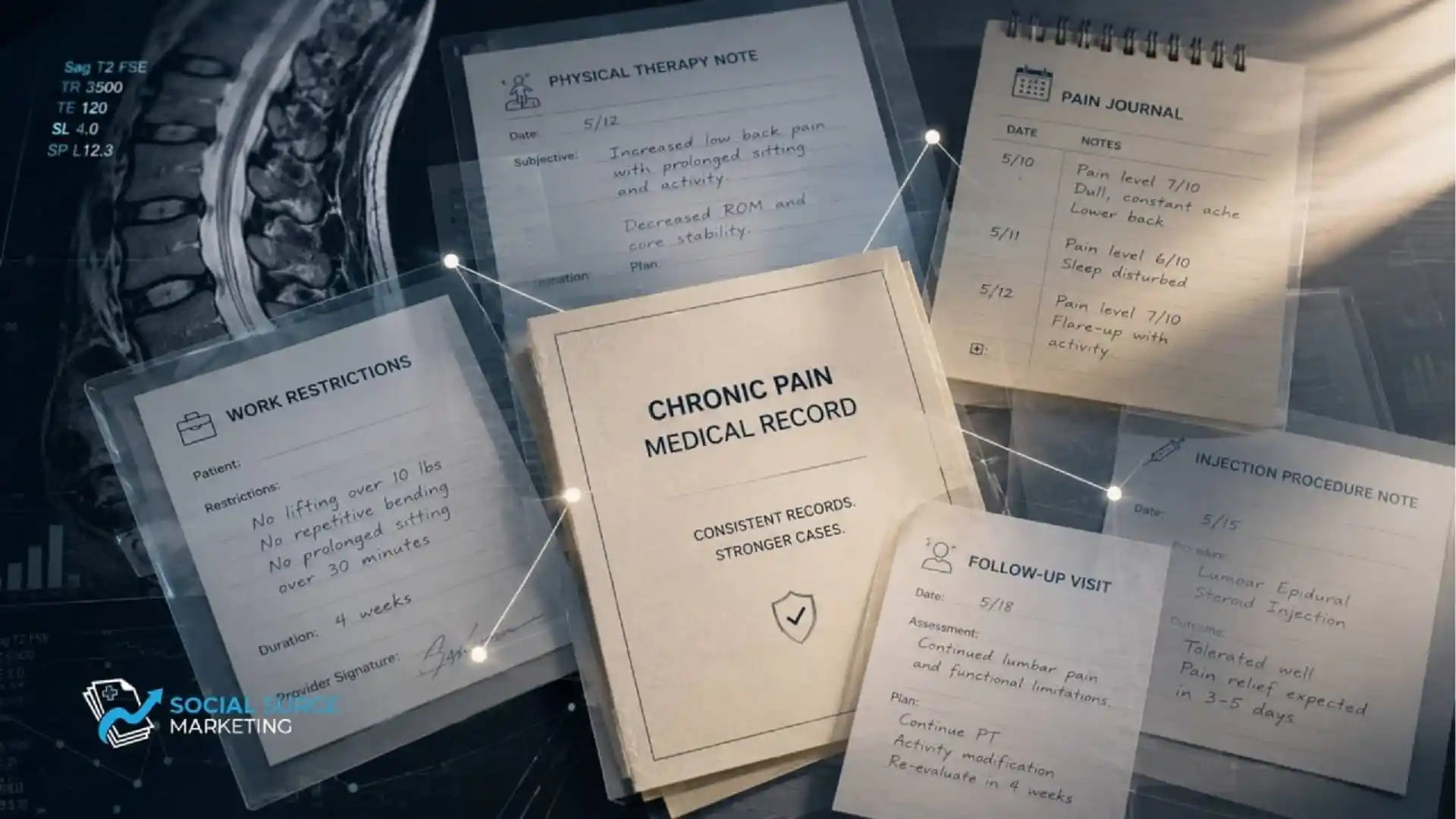
Pre-demand review asks whether the chronology can hold up when the defense starts testing it. Before demand, mediation, or litigation, attorneys and case managers should audit the file for weak points the defense is likely to use.
This review does not replace legal analysis or medical opinion, but it can help the firm identify whether the record is complete, organized, and clear enough to support the claim.
- Do early complaints match later chronic pain patterns?
- Are treatment gaps identified and explained?
- Are provider changes connected in the chronology?
- Do functional limitations appear consistently across the record?
- Is medical necessity explained when care continues or escalates?
- Is prior history compared with post-incident changes?
- Are imaging findings connected to symptoms, exams, and limitations?
- Are referral delays, missed records, or incomplete provider notes identified?
- Does the file show treatment response over time?
- Would a defense reviewer be able to argue that the story is disconnected?
This type of review helps the firm decide whether additional records, provider clarification, expert review, or stronger chronology support may be needed before the claim is presented.
For Texas PI attorneys preparing chronic pain demands, medical record review for Texas PI attorneys can help organize records, identify gaps, and build clearer medical timelines before negotiation or litigation pressure begins.
How Social Surge Supports Chronic Pain Record Review
Social Surge Marketing helps Texas PI law firms organize chronic pain records, identify documentation gaps, monitor treatment progress, and prepare clearer medical chronologies for case review.
For chronic pain files, that support may include organizing records by provider and treatment phase, identifying missing records or unclear treatment gaps, tracking treatment progression, comparing prior history with post-incident complaints, flagging weak functional documentation, and helping case teams prepare medical chronologies before demand, mediation, or litigation.
The purpose is not to replace legal judgment or medical opinion. The purpose is to help the case team see whether the file tells a clear, consistent medical story.
A well-organized chronic pain file can help attorneys better evaluate causation, treatment necessity, damages, prior history concerns, and the overall strength of the medical evidence.
For firms handling these claims, chronic pain case support can help connect the treatment story before the defense controls the narrative.
Final Thoughts
Chronic pain claims in personal injury cases are not strengthened by file volume alone. A large medical file can still become vulnerable when the records are repetitive, disconnected, unclear on function, or weak on medical necessity.
The strongest chronic pain files tell a consistent medical story. They show what changed after the incident, how symptoms progressed, how treatment evolved, why care remained necessary, and how pain affected the client’s daily life and work capacity.
Strong medical evidence for chronic pain claims does more than document symptoms. It helps explain treatment decisions, support causation analysis, address prior history concerns, and reduce the impact of gaps or unclear provider notes.
Social Surge Marketing helps Texas PI law firms organize chronic pain records, identify documentation gaps, monitor treatment progress, and build clearer medical chronologies before demand, negotiation, mediation, or litigation.