

In many Texas personal injury cases, claim value starts to weaken before a lawsuit is ever filed.
The injury may be legitimate, the treatment may be real, and the medical bills may be substantial. But if the medical record does not clearly explain why the treatment was necessary, how symptoms progressed, or why care continued over time, insurance carriers have room to challenge the value of the claim.
Medical necessity is not just a clinical issue in PI cases. It is one of the first areas carriers review when looking for reasons to reduce damages. A vague therapy note, an unexplained referral, a delayed MRI, a treatment gap, or inconsistent provider language can shift leverage away from the firm before negotiations begin.
For Texas PI attorneys, the issue is not simply collecting records. It is building a medical file that tells a clear, defensible treatment story from intake through settlement or litigation.
How Insurance Carriers Evaluate Medical Necessity in PI Cases
Insurance carriers rarely review treatment records at face value. Instead, they look for weak points: care that appears unrelated to the accident, treatment that seems excessive, or notes that do not clearly explain the clinical reasoning.
A case may look strong at intake. The client reports pain, begins treatment, and accumulates medical bills. But during demand review, carriers often focus less on months of consistent treatment and more on a missed follow up visit, an unexplained provider change, or one note that conflicts with the rest of the file.
Why Settlement Value Often Declines Before Trial
Settlement value often declines long before a case reaches trial because carriers begin identifying weaknesses during demand review.
Even when liability appears clear and treatment is documented, the carrier may focus on what the medical file does not explain. An unexplained treatment gap, a delayed specialist referral, a sudden provider change, or repetitive therapy notes can make otherwise legitimate care appear excessive, unrelated, or poorly supported.
The risk is that the carrier builds its valuation around those weaknesses before the firm has a chance to control the medical narrative. At that point, the attorney is no longer just negotiating damages. The firm is defending gaps in the record.
This is why many PI firms use treatment oversight and provider coordination earlier in the case. When treatment progression, referrals, imaging, and provider notes are reviewed before demand preparation, the firm has a stronger opportunity to protect claim value before the carrier defines the weaknesses first.
How Documentation Gaps Strengthen Defense Arguments
Documentation gaps give the defense room to create its own version of the treatment story.
A treatment gap does not always mean the client recovered or stopped needing care. The delay may come from referral issues, scheduling problems, transportation barriers, insurance delays, or difficulty getting follow-up appointments. But if the record never explains the gap, the carrier or defense can argue that the injury improved, treatment was unnecessary, or the later care was unrelated to the accident.
The same problem appears with delayed imaging, unclear referrals, inconsistent pain scores, or vague therapy notes. A delayed MRI can be framed as unnecessary escalation. An unexplained provider change can look like treatment shopping. Repetitive therapy notes can make continued care appear unsupported.
In strong PI files, these issues are addressed before the defense uses them. The record should explain what happened, why care continued, and how each treatment decision remained connected to the injury.
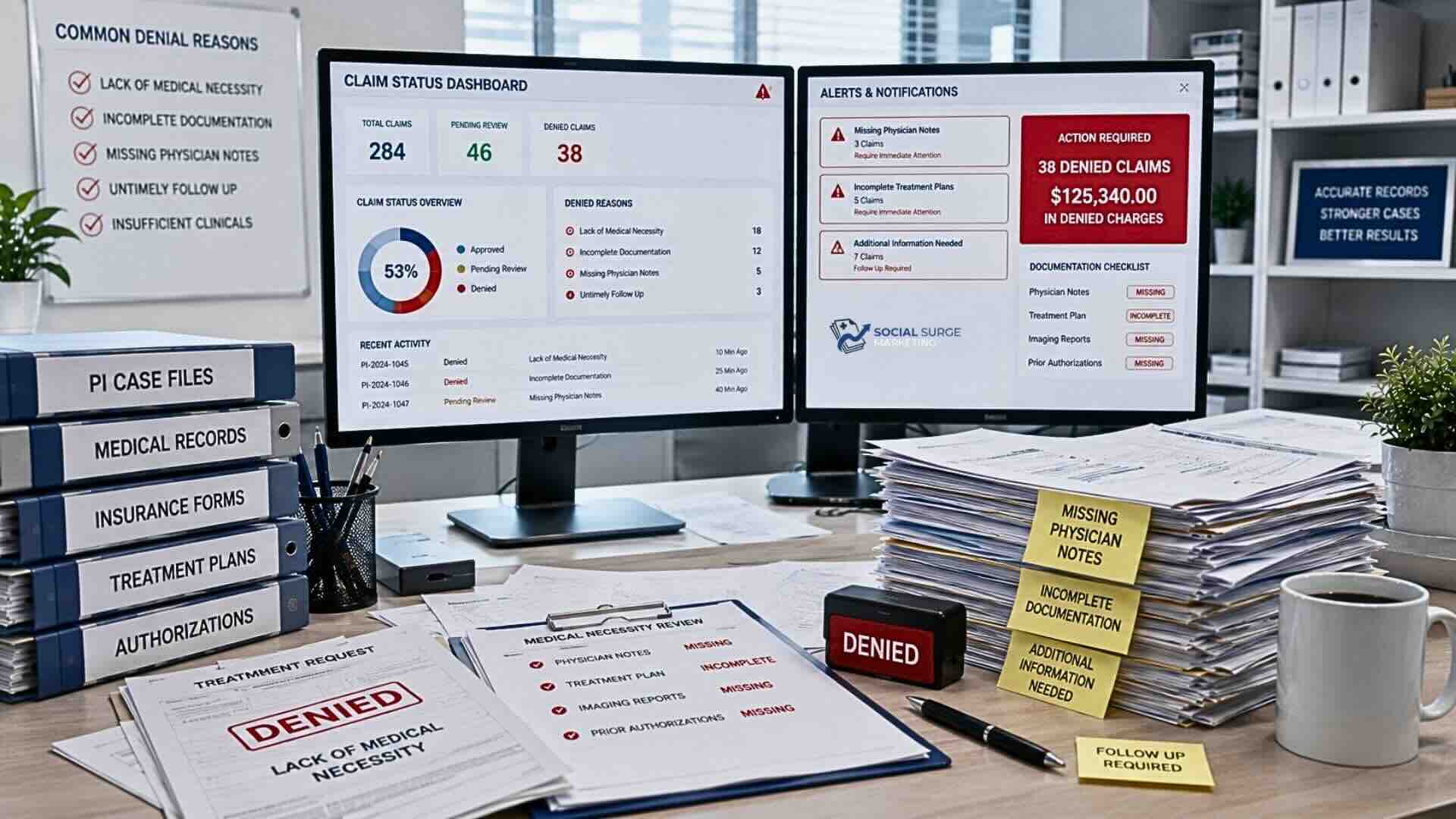
Why Medical Necessity Often Becomes a Litigation Issue in Texas PI Cases
In Texas personal injury cases, treatment necessity is often viewed through a litigation lens. Carriers are not only asking whether treatment helped the client. They want to know whether the care was clearly tied to the injury and supported well enough to hold up under review.
According to the Centers for Medicare & Medicaid Services, medically necessary care must be reasonable and necessary for diagnosis or treatment. The National Association of Insurance Commissioners also explains that medical necessity is tied to accepted standards of care and clinical appropriateness.
Why Letters of Protection Receive More Scrutiny
When treatment occurs under Letters of Protection, insurers often challenge medical necessity in personal injury cases by arguing that care was financially motivated. Treatment under an LOP is not automatically a problem. Poorly explained care usually is.
Provider records play an important role in proving medical necessity in injury claims, especially when treatment changes over time. Without clear clinical reasoning, the defense gains more room to question medical necessity.
How Multi-Provider Treatment Can Complicate Case Chronology
When treatment moves across multiple providers, documentation gaps and timeline inconsistencies become harder to manage. That is why many firms use organized medical record review for Texas PI cases to identify weak points before carriers do.
Early review often catches missing referrals, inconsistent provider notes, or unexplained treatment gaps before negotiations.
How Disorganized Treatment Records Can Hurt PI Claims
Disorganized treatment records can weaken medical necessity in personal injury cases.
When MRI reports, therapy notes, specialist evaluations, and billing records arrive out of sequence, legal teams often have to rebuild the treatment timeline manually.
These issues often include:
- Unexplained gaps between appointments.
- Provider notes that do not match the client’s reported symptoms.
- Treatment escalation without documented clinical reasoning.
When these problems remain unresolved, the carrier gains negotiation leverage.
Why Medical Records Alone May Not Prove Treatment Necessity
A large medical file alone does not make a claim easier to defend. The issue is usually whether the records explain the treatment sequence clearly enough for review.
Why Clinical Narratives Matter More Than File Size
For proving medical necessity in injury claims, the record must tell a logical story. It should show what changed after the incident, how symptoms developed, why treatment was recommended, and how the client responded. Inconsistent provider language, repetitive therapy notes, or unexplained symptom changes can quickly weaken the credibility of an otherwise legitimate claim.
This is why many firms rely on structured medical record review for personal injury cases to identify documentation weaknesses before settlement negotiations begin.
A strong clinical narrative connects diagnosis codes, symptoms, imaging, orthopedic findings, provider observations, and treatment decisions into a clear, defensible treatment story. Without a clear treatment story, even a large file can feel weak during claim review.
Objective Findings Alone Do Not Fully Protect Claim Value
Imaging, orthopedic tests, and diagnostic studies matter, but medical records and treatment necessity are not always explained by imaging alone. A report may mention mild findings while the client continues to experience radiating pain, limited mobility, or worsening function.
A mild finding can still matter when the record explains functional loss, symptom progression, and failed conservative care.
Otherwise, the defense may isolate one MRI phrase and ignore the broader treatment history.
How Strong Documentation Supports Medical Necessity in Personal Injury Cases
A stronger settlement position starts when the carrier can follow the treatment timeline without having to fill in missing explanations.
A clean treatment timeline also helps firms defend treatment decisions during negotiations. Provider notes that explain clinical reasoning make the claim harder to dismiss. Organized records help firms stay ahead of defense arguments.
Strong documentation helps PI firms:
- Show why treatment remained connected to the injury over time.
- Support continued care with clearer medical reasoning.
- Present damages in a way that feels organized and defensible.
This is where treatment documentation begins affecting settlement leverage long before mediation starts.
The Administrative Burden of Weak Medical Documentation
Case managers spend time chasing records while paralegals try to reconcile inconsistent provider timelines. Attorneys sometimes discover those inconsistencies after the carrier has already reduced the offer. At that point, the firm is not just correcting paperwork; it is trying to repair a valuation problem that may already have affected negotiations.
Many firms do not discover these problems until demand preparation begins. A missing diagnostic report, an unclear referral note, or a therapy record with vague progress language can force the team to stop, track down missing information, and rebuild the timeline under pressure.
Why Many PI Firms Outsource Medical Documentation Review
Many PI firms outsource medical documentation once treatment spreads across multiple providers. The work requires consistent follow up, careful review, and an understanding of how carriers look for weak points in the file.
Early Documentation Review Helps Prevent Larger Problems
Reviewing records early gives firms more time to request missing documents, catch provider inconsistencies, and explain treatment gaps before negotiations begin.
It also helps firms address medical documentation gaps before the demand package is built.
Organized Case Files Improve Litigation Readiness
A litigation ready case file should make it easy for attorneys, case managers, mediators, or experts to follow the treatment story. That is difficult when records arrive out of order or across multiple providers.
In active PI cases, treatment oversight and provider coordination can help keep documentation organized and manageable.
That visibility helps firms spot medical records and treatment necessity issues earlier.
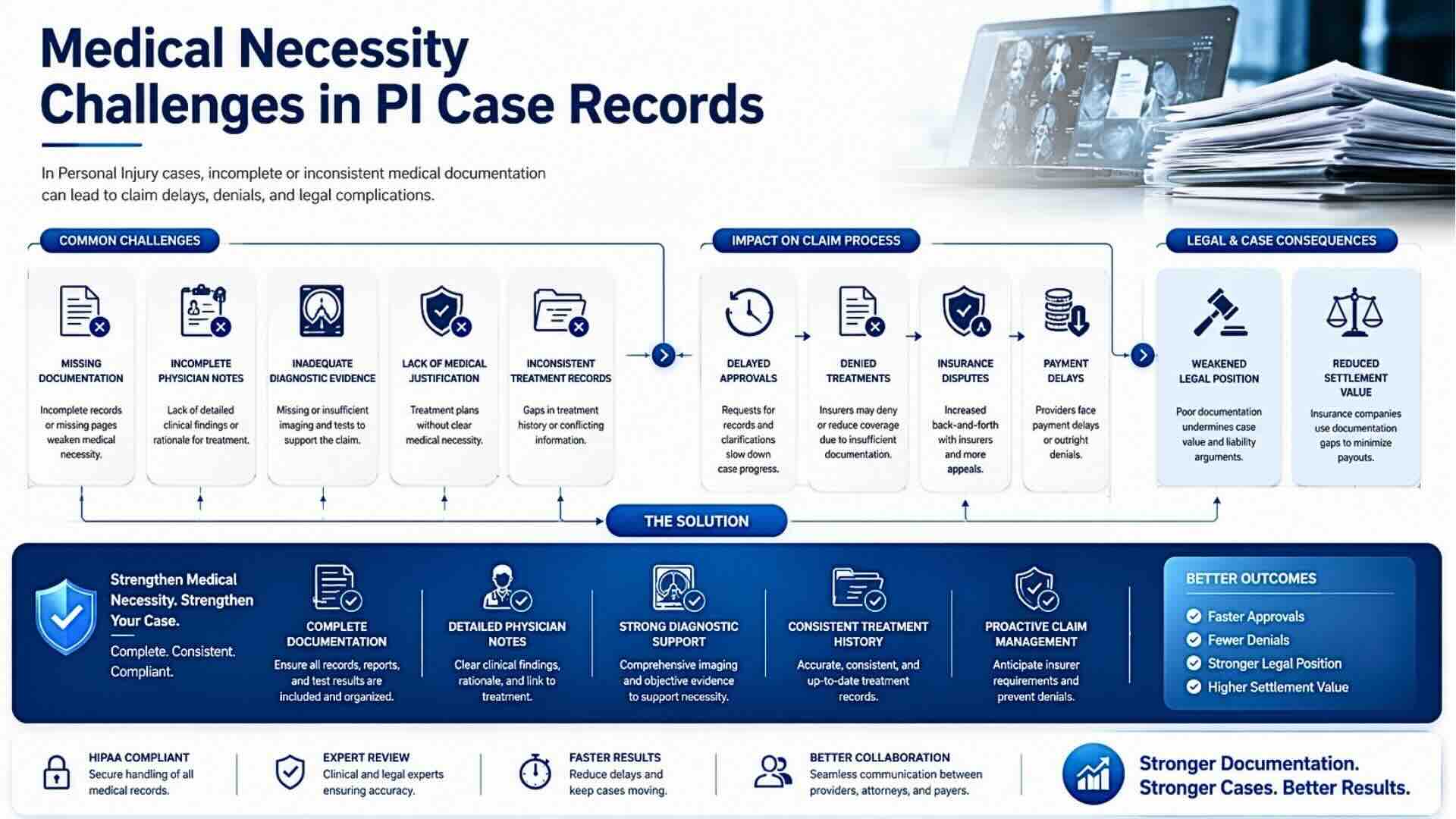
How Texas PI Firms Improve Medical Documentation for Treatment Necessity
Texas personal injury firms often deal with medical necessity problems long before litigation begins. Incomplete timelines, inconsistent provider records, and weak documentation can reduce settlement leverage before the defense formally disputes the claim.
Many firms use structured medical record review, treatment oversight, and provider coordination early in the case to strengthen documentation before negotiations begin.
When expert input becomes necessary, expert witness coordination for complex PI cases can help connect treatment records with medical opinions that support causation, treatment necessity, and future care needs.
The goal is not simply to collect more records to support medical necessity in personal injury cases. It is building documentation that remains consistent, explainable, and easier to defend once the treatment timeline comes under scrutiny.
Conclusion
Medical necessity in personal injury cases is often weakened by small documentation problems long before litigation begins. Disorganized timelines, inconsistent provider records, and treatment gaps can quickly shift negotiation leverage toward the defense.
For Texas PI firms, the issue is not just proving treatment happened. It is proving the treatment was necessary, consistent, and properly documented from the beginning. That is why many firms focus on proving medical necessity in injury claims through stronger review of medical records and treatment necessity before negotiations begin.
Strong medical documentation for treatment necessity helps firms protect claim value, strengthen case presentation, and reduce opportunities for carrier pushback. Social Surge Marketing helps Texas PI firms keep treatment records organized, defensible, and easier to manage before documentation issues affect claim value.